
Nolan-Coded Homer or: Don’t Be A Hero, It’s Not Worth It
Written by D.S. Foster
Edited by J. Nagle
Cinema as a singular event… Christopher Nolan, Hollywood’s most dependable manufacturer of prestige-slop, should have exhausted his commercial mythology by now. Following the theatrical coronation of The Dark Knight, the Oscar benediction of Oppenheimer, the “Barbenheimer” evangelization of moviegoing into social-media crusades, and of course, the sacrament of Interstellar in the hearts of emotionally constipated men everywhere, what kingdom is left for him to claim?
The Odyssey answered with $264.1 million worldwide, eclipsing Nolan’s previous debuts and every other R-rated release this year. Second now only to Marvel’s catalogue giant, Spider-Man and his Big Day Out or whatever… I’m just kidding, those movies are fine. The number matters less as another laurel for Nolan than as an indictment of an industry incapable of recognizing the audience’s appetite for depth—for films of enduring cultural value.
Hollywood’s supposedly safe investments have exposed the fraudulence of franchise logic: sequels, remakes, and interconnected product lines increasingly resemble the residue of a creatively exhausted system. Nolan offers an expensive but persuasive alternative. A proven filmmaker, charismatic performers in practical danger, immense physical scale, and images worth leaving home to see can still generate collective excitement.
Hollywood will welcome the film’s success and almost certainly misunderstand it. The lesson is not simply to finance more tent-pole epics or imitate Nolan’s aesthetics, but a broader principle to invest in filmmakers rather than properties, cultivate anticipation rather than flood the market, and treat visual grandeur as an artistic instrument instead of a promotional adjective.
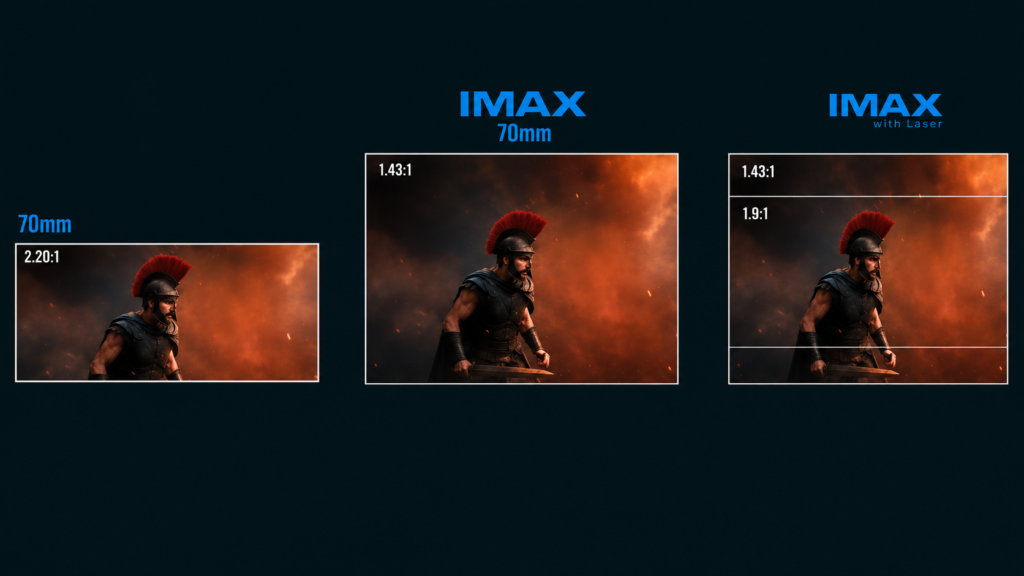
The Odyssey succeeds through a union of high culture and mass sensation that Hollywood’s marketing departments usually regard as incompatible. Homer supplies intellectual legitimacy, Nolan’s celebrity-auteurship supplies commercial viability, and spectacle supplies the decisive promise. Photographed by Hoyte van Hoytema in open-matte IMAX 65mm, the film makes theatrical exhibition inseparable from the work. Nolan has long wagered audiences will pursue experiences streaming cannot flatten into the convenience of the home. Projection, photographic craft, sound, and physical magnitude become part of the drama’s meaning.
Nolan against Homer and critics against Nolan… Homer’s Odyssey casts the human condition as a struggle toward home. Odysseus returns from Troy through erotic distraction, monstrous appetite, natural chaos, and divine vengeance, pursuing Ithaca as both destination and an embattled idea. His wife Penelope, outwits parasitic suitors while his son Telemachus, searches for an absent father. The poem turns adventure into moral and spiritual testing: hospitality against violence, memory against temptation, identity against disguise, presence against absence; and Odysseus survives through cunning more than virtue.
Nolan refracts Homer’s heroic tradition through the spiritually corrosive psychology of modern warfare. He approaches Homer not as a record to reconstruct or monument to preserve, but as inherited human mythology to interrogate and translate into contemporary cinematic language. The results rank among his strongest films because The Odyssey recognizes epic not merely as scale, but as a crisis of consciousness. Like David Lean’s Lawrence of Arabia, it turns landscape into an arena for moral reckoning.
Nolan’s Odyssey confronts the Homeric paradigm as damaged ideological machinery. The Odyssey as Western civilization’s foundational action-adventure narrative; as archetype of conquest, masculine honor, patriotic sacrifice, and the endlessly commercialized Hero’s Journey. Nolan asks what remains when the hero no longer believes his legend. The grandeur that once confirmed Odysseus’s greatness now exposes the moral and psychological wreckage required to produce it.
Critics such as Daniel Mendelsohn claim Homer’s humorous trickster has been stripped of his wit and cleverness, becoming another guilt-ridden “Nolanite;” Odysseus as a tormented cousin to Batman or Oppenheimer. [1] The diagnosis is accurate, but not the dismissal. Nolan remakes Odysseus for a culture that places heroic masculinity on trial. The film asks not only whether the hero won, but who paid for his victory; not simply whether he returned home, but whose home was destroyed to make his return possible. Odysseus’ cleverness remains, but the moral cost of his cleverness has become unbearable.
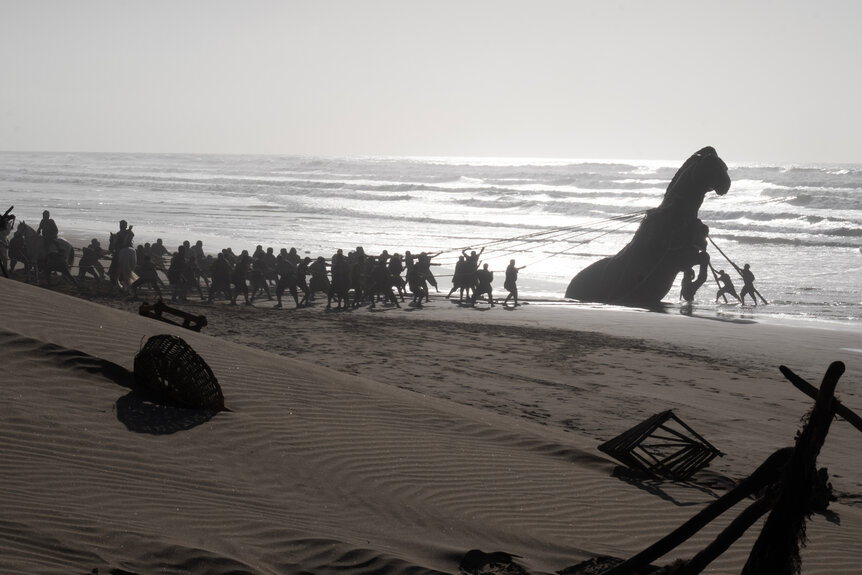
Homeric heroism depends on excellence demonstrated through action and preserved through communal memory. Nolan’s Odysseus inhabits a world in which those signs of distinction have become spiritually meaningless. His ingenuity does not free him from violence; it makes him responsible for violence on an unprecedented scale. The Trojan Horse becomes the central image of that responsibility.
In Homer, hospitality is both social contract and sacred warning, binding stranger and host beneath the possibility that either might be divine. The Trojan Horse corrupts that law absolutely. A gift becomes a weapon, hospitality becomes infiltration, and trust becomes military strategy. Odysseus’s supreme act of cunning abolishes the distinction between guest and invader. Nolan reduces the crime to a damning proposition: one man’s trick has broken divine law.
The Trojan Horse therefore becomes the hero’s original sin. Troy’s destruction is not some abstract victory, but Odysseus’s design, burden, and nightmare. He does not merely struggle to return to Ithaca; he struggles to return from the self the war created. The Trojan Horse recurs in fragments like an accusation that survives every attempt at exoneration. Troy can be conquered in one night, but the memory of conquest cannot be escaped so quickly.
Nolan’s interpretive audacity will inevitably be mistaken for eccentricity or being “woke” by viewers who prefer mythology embalmed rather than examined and history accepted rather than questioned. Consequently, Nolan transforms the homeward journey into an examination of victorious guilt. Glory becomes a cultural deception that preserves the hero’s name while aestheticizing atrocity. Each mythic trial strips away another illusion—control, righteousness, certainty, invulnerability. The Cyclops, Circe, the Sirens, shipwreck, hunger, and isolation become externalizations of Odysseus’s stained soul—of appetite, aggression, grief, and the compulsive need to dominate.
Time is not the film’s puzzle. Time is its wound… Nolan’s characteristic anachronism is no longer simply a visual or conceptual game. It becomes the syntax of his interpretation. Odysseus is both archaic warrior and contemporary veteran, conqueror and damaged witness, a figure whose geographic exile cannot be separated from the duration of his displacement. His journey is not organized as a reassuring sequence of adventures—this happened, then this happened, then this happened—but as the convulsive return of experience that has never become safely past.
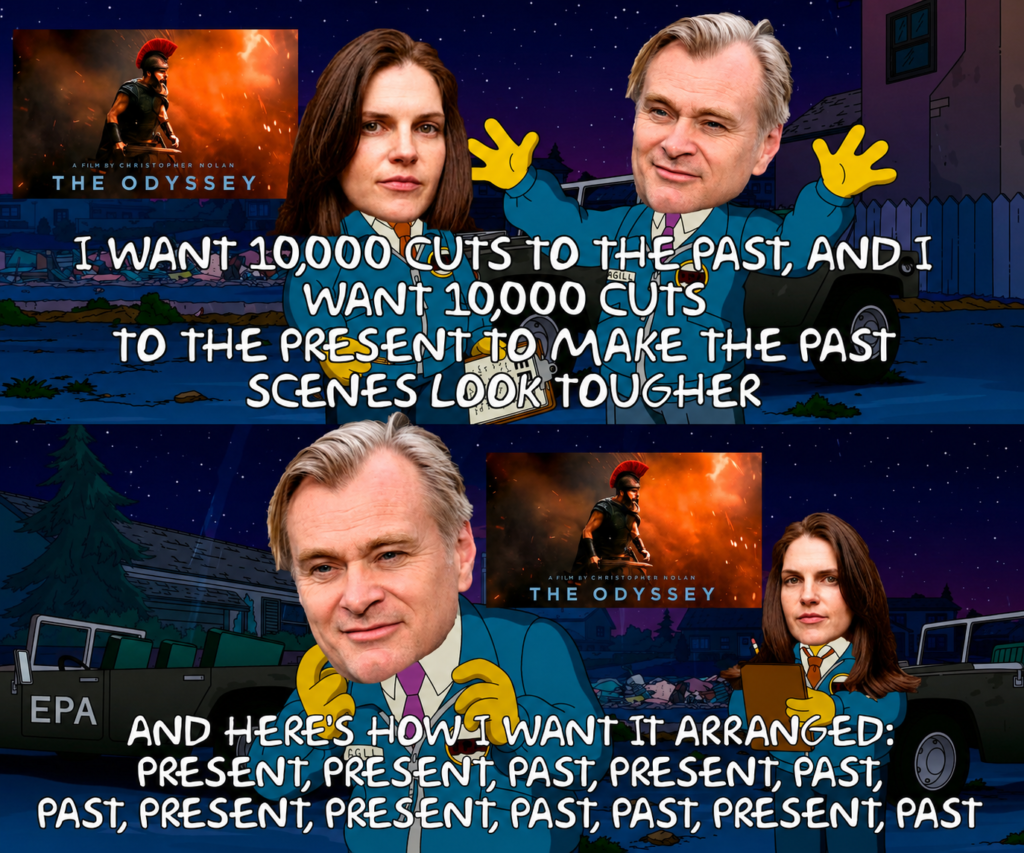
Nolan’s temporal machinery has rarely felt more emotionally necessary. Editor Jennifer Lame abandons linear exposition for invasive recollections, asynchronous timelines, and psychologically charged crosscuts.
Past and present do not alternate; they contaminate one another. Odysseus is incapable of remembering the war from a stable position outside it because he remains a prisoner of memory. Time is not the film’s puzzle. Time is its wound.
Photography as memory… Van Hoytema’s IMAX photography enlarges reckoning between time and memory. Ships become specks between water and sky; bodies disappear into beaches and battlefields. The scale is mythic rather than merely historical. Monsters viscerally embody the consequences of physical domination: the Cyclops is a grotesque practical creation, Circe’s transformations become tactile body horror, and the Laestrygonians loom through forced perspective. Nolan rescues mythology from decorative fantasy by restoring its terror. In the underworld, fallen soldiers rise not to honor their commander but to accuse him. They are not supporting characters in his legend; they are the human cost that legend conceals.
The image carries particular force in a nation that prefers its victims silent. American history repeatedly transforms suffering into patriotic symbolism while avoiding questions of responsibility. Wars are remembered through commanders and casualties; sacrifice is celebrated while inquiry into who ordered it, who benefited, and who returned home is discouraged. Nolan’s dead refuse that bargain. They reclaim their voices from the man whose glory depended on their deaths.
These episodic trials become splinters of a war that hasn’t ended for Odysseus. Scylla and Charybdis force him to calculate which men must die, reproducing the command decisions at Troy. Calypso offers oblivion, but forgetting cannot heal what hasn’t been confessed. The Sirens seduce by exposing true desire beneath declared desire: perhaps Odysseus does not truly want to return home because home demands accountability.
Matt Damon’s weathered physicality suits this interpretation. Nolan transforms his face into a landscape scarred by the ruins of victory. He anchors myth not through aristocratic grandeur but through the fatigue of a man who has spent years inventing reasons for others to die.
The gods remain largely unseen, appearing through weather, sound, coincidence, and elemental violence. Poseidon need not materialize because the sea itself becomes his face. Odysseus reads every storm as a verdict because guilt has taught him to recognize accusation everywhere. By minimizing Olympian intervention, Nolan removes the metaphysical alibi that protected heroic action. Suffering can no longer be attributed to divine stage direction; it becomes the consequence of human choice.
The film remains tethered to Odysseus’s consciousness, and that emphasis creates limitations. Nolan interrogates heroic masculinity without fully escaping its privileges. Penelope’s grief is beautifully framed but psychologically diminished, turning her too often into the keeper of a home Odysseus endangered. This belongs to a broader cultural habit in which women, especially Black women, preserve emotional and domestic order while men receive complexity, failure, and redemption.
Yet Anne Hathaway gives Penelope sovereign dignity, intelligence, anger, and resolve. Her weaving and unweaving becomes the film’s governing formal principle. Narrative threads are assembled, dismantled, and reassembled; events change meaning as Odysseus’s relation to them changes. Penelope does not merely delay an unwanted future. She performs, in miniature, the movie’s revision of the past.

The casting of Lupita Nyong’o as Helen of Troy carries significance beyond screen time. Western culture has traditionally imagined Helen as a marble ideal, aestheticizing whiteness until it appears metaphysical. Nyong’o’s presence breaks that spell. She does not simply modernize Helen; she confronts the racial imagination through which the West has pictured perfection and exposes how the classical ideal has been curated by those empowered to recognize themselves within it.
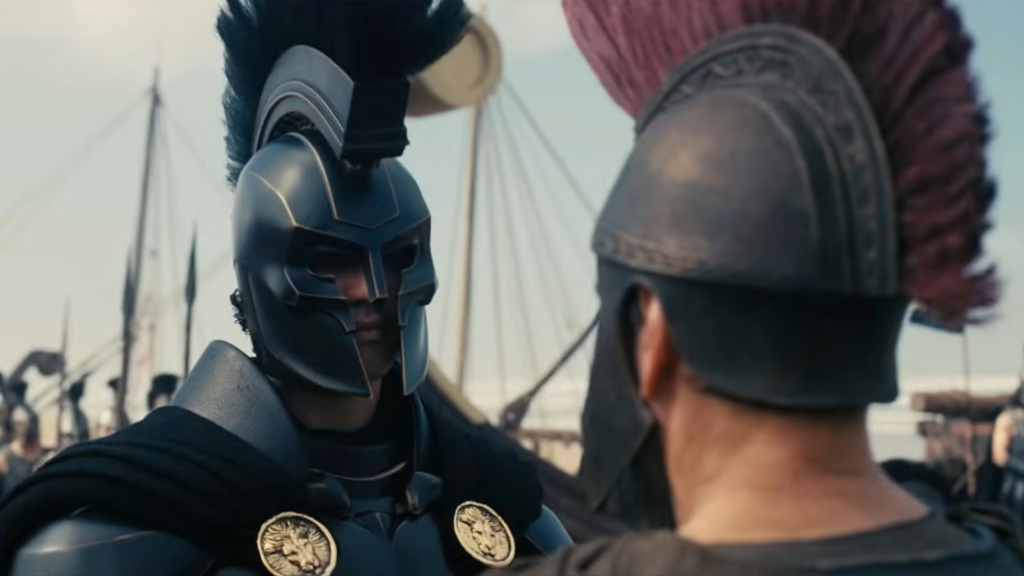
Celebrity becomes part of the film’s mythic grammar: recognizable faces appear like apparitions, briefly taking possession of the narrative before vanishing. Benny Safdie’s Agamemnon for instance, consists almost entirely of “vibe,” haunted vanity, and what Gen-Z calls aura farming. Safdie understands Agamemnon’s gravitas depends more on the social performance of inevitability than on psychological disclosure. Agamemnon enters the frame, already surrounded by the legend he wishes to impose upon others. Nolan’s casting turns such grandiosity into a joke without diminishing its menace.
Tom Holland and Zendaya remain recognizably themselves. Viewers already persuaded by either performer will find confirmation; skeptics will not be converted. This is not necessarily a flaw. Nolan uses their existing screen identities rather than pretending to erase them.
Production design and photography are master classes in material persuasion. Costumes that appeared synthetic in publicity stills acquire ritual dignity in motion. Texture, weather, architecture, and bodies create a convincing visual ecology. Heightened color makes flesh, fabric, flame, sea, and stone elements in a moral landscape. IMAX produces monumental scale without emotional remoteness. The image can contain armies and still register dread in a human face.
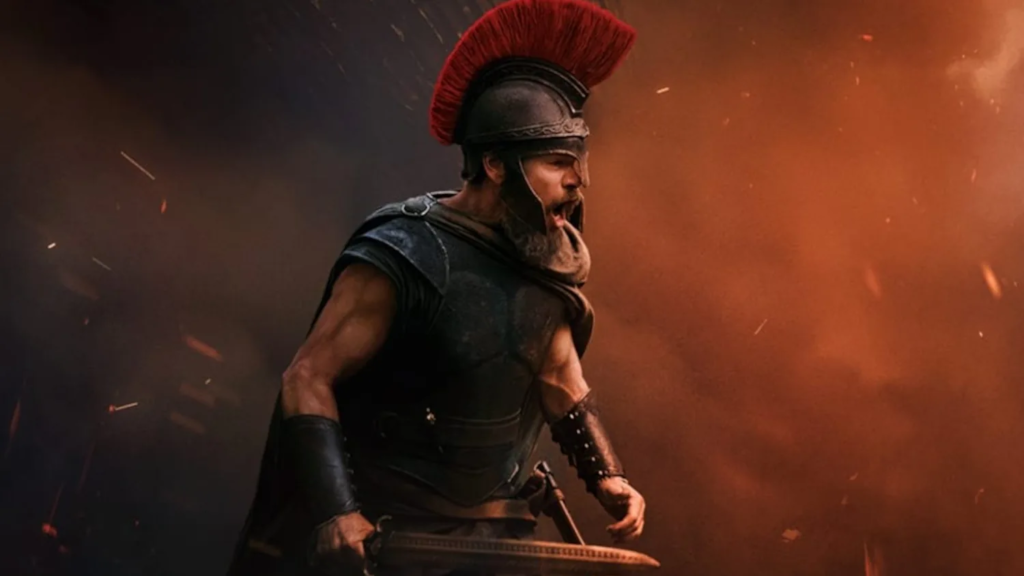
The film’s treatment of war is its most politically provocative achievement. Odysseus’s trauma is real, but it is not morally exculpatory. Nolan confronts a contradiction American culture often avoids: a soldier’s suffering may be genuine even when the war that produced it was imperial, criminal, or catastrophic for others. The veteran’s fractured consciousness becomes part of the historical damage, not a substitute for acknowledging those destroyed beyond his field of vision.
The film’s parallels to the Iraq War, the War on Terror, contemporary Israel, and militarized national destiny are difficult to miss, though they do not form a simple allegory. Every empire imagines itself as the returning hero and its victims as obstacles along the voyage home. Leaders manufacture aura, warriors transform devastation into legend, and nations call plunder destiny.
The homecoming story conceals the question no conqueror wishes to answer: What kind of home can receive a man built through cunning and war?
For all its severity, The Odyssey is exhilarating cinema: formally ambitious, tactile, psychologically coherent, politically abrasive, horrific, humorous, and mythic. The advertising sold scale. Nolan has made a film about the moral cost of scale. Nolan’s Odyssey then becomes a deconstructionist parable about the exhaustion of the Hero’s Journey. It asks whether contemporary culture can continue celebrating departure, conquest, ordeal, victory, and return without confronting the violence those stages conceal. The monomyth has become one of commercial cinema’s most dependable evasions, disguising domination as self-discovery.
The real transformation is not Odysseus becoming worthy of legend, but recognizing that legend may be the obstacle to a moral and fulfilling life. His ultimate lesson is accountability. His healing begins with the abandonment of godlike self-regard. He becomes free to live only when he relinquishes the fantasy that made death meaningful by making killing glorious.
Adaptation has always changed stories. Oral tradition is not a museum but an argument across generations. Nolan treats Homer as something to be disputed because it still possesses authority. His fragmented recollections and competing perspectives show legend being manufactured in real time. Odysseus exists differently in the memories of Penelope, Telemachus, soldiers, servants, and enemies. The hero’s identity becomes communal property, claimed by everyone affected by his actions.
The film’s flaws remain: its antiwar argument can become melodramatic, its action can lose clarity, Penelope is diminished, and reverence for male guilt sometimes becomes male self-importance. Yet Nolan turns the Hero’s Journey inside out and that is not without merit. Physical return cannot restore the spiritual and moral order the hero violated— The true journey is toward accountability—the recognition that intelligence without ethics becomes treachery, victory may become desecration, and legend itself may obstruct moral life.
Nolan’s Odyssey is not Homer preserved but Homer placed under pressure. That pressure keeps the myth alive. It allows women, Black audiences, veterans, and descendants of conquered peoples to ask the forbidden question: What if the monster was never merely waiting on the island? What if it sailed there beneath the hero’s flag?
The Hero’s Journey no longer ends when Odysseus reaches Ithaca. It ends when he recognizes that he may have brought the monster home with him. The question is not merely whether his body can return, but whether his conscience can arrive with it.
A strong four out of five. See it on the largest screen available.
If you wanna see another interpretation of the story, go check out Troy: The Odyssey over on our sister site, Galxy!