



The Edge of Sleep, starring Mark Fischbach, released to Amazon Prime Video this October to immediate success on the platform’s charts. However, as he has recently revealed in a Reddit thread, there is still much to do.
Fischbach, widely known online by his YouTube username Markiplier, recently revealed a series adaptation of the podcast he stars in, The Edge of Sleep, would be releasing in mid-October. However, as the video implied and promotion (or, lack thereof) would soon show, the series’ success was to be built on its own terms. To this end, Fischbach uploaded a video to his YouTube channel urging his subscriber base to make noise and watch The Edge of Sleep on release, soaring it into the top 10 charts on the platform. Fischbach went on to mention Iron Lung, the film adaptation had directed of David Szymanski’s game of the same name, would have “doors [opened]” as a result of this goal being hit.
Loyal fans of the Markiplier channel scrambled leading up to October 15th, making sure to get the series’ viewership as high as they possibly could while making as much noise about the show as Fischbach had instructed. Fellow creators would even come out with their own ways of helping his campaign, one of whom being the popular commentator Charlie White Jr, also known as Cr1TiKaL. Not long after the release of the series (and subsequent fan propulsion into the platform’s charts), he would come back to upload another video on the matter, and discuss the terms with multiple fans on the r/Markiplier subreddit.

Make no mistake, this is not Mark Fischbach’s frustration with the performance of The Edge of Sleep. The YouTuber’s loyal and passionate fanbase propelling the show past the top 10 into the top FIVE shows on the platform after release disproves this. This is Fischbach at his most passionate, at a point in time where he is confident in the doors the series can open. If The Edge of Sleep performing this well so far will open doors for Iron Lung‘s release, just imagine what the subsequent success of Iron Lung could mean for Fischbach going forward, as well as what it could mean for YouTubers in Hollywood going forward as a whole. This is not a sign to lose steam, it’s a sign to keep making noise, as everything the community has done thus far is only getting the film closer to a full release.
The Edge of Sleep follows Dave (Mark Fischbach) as an insomniac night watchman with a history of somniphobia among other mental health issues. When he finds one morning that everyone who fell asleep the prior night perished while unconscious, he teams up with some current and ex-friends to survive the coming days and get to the root of the phenomenon, all without falling asleep.
The Edge of Sleep is now streaming on Prime Video.
The studio trend of long-awaited sequels and revivals has run its course for some, but not at all for Beetlejuice. In addition to the original film’s sequel being in development hell for over thirty years, it felt right for the story to return specifically now. We’re in a period of cinema where weird, experimental horror films are back in full swing and audiences keep coming back for more. Beetlejuice, fitting into all three of those categories, has remained as timeless a talking point as ever. Especially with the success of the unfortunately short-lived Broadway adaptation, it made all the sense in the world to revisit Tim Burton’s twisted world all these years later.
The sequel has already grossed over $300 million and counting on a $100 million budget since its release earlier this month, and for good reason. The film immediately grabs your attention with how different it looks from the others out at the moment, which especially works to its benefit. The palette and sets don’t look out of place when compared with the world the original film sets up. Burton’s insistence on using practical sets is a staple of his work, and it really shines in Beetlejuice Beetlejuice. This decision helps make the afterlife ironically feel even more alive than before.
The actors work within these locations super well, both returning and new additions to the cast. Winona Ryder’s portrayal of Lydia in this film isn’t an exact one-for-one translation of how she was in the original, but rather an evolution. Jenna Ortega’s character plays a bit closer to the original iteration of Lydia from Beetlejuice, though is far from an exact copy. Her reluctance to believe in anything supernatural ends up creating this distant and mysterious character who’s two sides of the same coin with a young Lydia. Michael Keaton’s Betelgeuse hasn’t aged a bit, still as disgustingly hilarious as you remember him to be. Funny enough, Keaton having not aged as Betelgeuse works with the narrative well, as we see others retaining their form they first took on when they died. The same makeup, outfits and voice bring the film home as what feels like a true next step in the Beetlejuice franchise.

With how loose and unpredictable the original Beetlejuice can be, it’s hard to describe Beetlejuice Beetlejuice as a return to form. In fact, some of its decisions feel just as spontaneous as the original film, though this doesn’t always work to its benefit. The flames of hell opening up beneath one of the film’s antagonistic forces is undoubtedly a hilarious gag, and definitely feels VERY Tim Burton. However, the antagonistic forces in the film, while involved in some entertaining sequences, just seem to come and go at times. Neither of the two shown are onscreen for a long enough time for any stakes to really build up as an audience member. This isn’t to say the original film needed that to hook people for as long as it has. Rather, neither antagonist is able to have quite as much staying power as someone like Betelgeuse himself has had.
That may feel like an easy out of sorts seeing as it’s his name on the poster, but it’s an important point to be made. While the film is entertaining, its stakes just seem a bit confused in their motivations. In addition to the antagonists with little staying power, I still wonder why Lydia even began seeing visions of Betelgeuse in the first place. It’s never elaborated upon other than him still yearning for Lydia as well, which isn’t even directly stated to be connected. The conflict between the two seems over and done with very quick, which is a problem I had with a lot of the film’s pacing now that I think about it.
Despite being cooked up for decades, Beetlejuice Beetlejuice feels more than a little underbaked. If you’re looking for problems, you’re more than likely to find a lot of them. However, when taking off the critical lens, it’s clear Burton’s passion for the world of Beetlejuice is as active as ever all these years later. It’s a passionate film where the cast and crew clearly had a lot of love for the property and a lot of fun working with it. It’s a strange, unusual sequel to a comedy horror classic, but when that’s the point of the original film as well, there’s no need to exile this sequel from the full story.
Beetlejuice Beetlejuice is now playing in theaters worldwide.
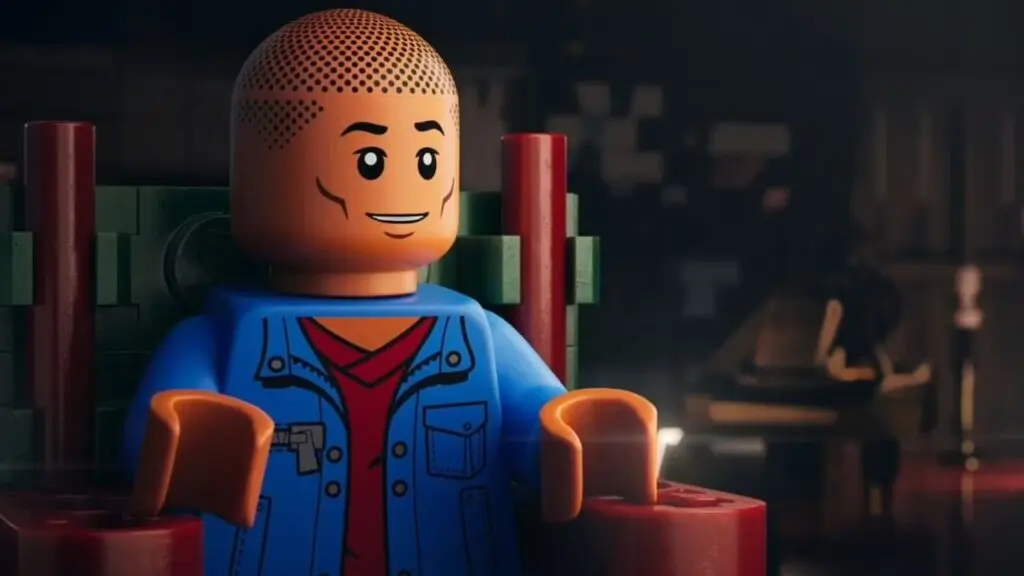
In a world saturated by musician biopic films, no one expected Pharrell Williams to shake things up in such an odd way. That’s a good thing, by the way.
Pharrell Williams’ self-produced documentary film Piece by Piece follows his own history and career in the music industry complete with guest appearances from fellow music producers such as Kendrick Lamar, Snoop Dogg, and even Daft Punk as was shown this Thursday. The twist no one was expecting—allegedly, not even the guests themselves—was that the entire film would be animated in the LEGO style.
In 2020, Universal acquired the film rights to the LEGO brand following a well-received three-movie tenure under Warner Bros. Pictures. Previously, the studio had released The LEGO Movie as well as its sequel, The Second Part, in addition to the spin-off film The LEGO Batman Movie. While even years later each of these films retain a fairly active fanbase of their legacy and characters, the sequel received underwhelming box office returns that led to Universal acquiring the rights. Despite reassurance that a new entry in The LEGO Movie franchise was in development, nothing came of this deal until this year when images and a trailer appeared for Piece by Piece, the Pharrell biopic that the musician himself was heavily involved with.
When the film’s first look was revealed, many were surprised, but not necessarily in a bad way. This was to be the first theatrical LEGO film since early 2019, and while the creative direction seemed different from that of the narrative-driven The LEGO Movie films, it seemed to still be there, albeit existing in a more biographical non-fictional form. This was a new spin on both the music biopic film and LEGO film, and early impressions from moviegoers seemed enthusiastic about the shake-up.
We’ll be covering the film over here once it comes out, and we have faith that Pharrell has a few more surprises left in store for us than just the initial reveal.
Piece by Piece releases in theaters on October 11th, 2024.
At the same time, though, even those low expectations get surpassed sooner or later.
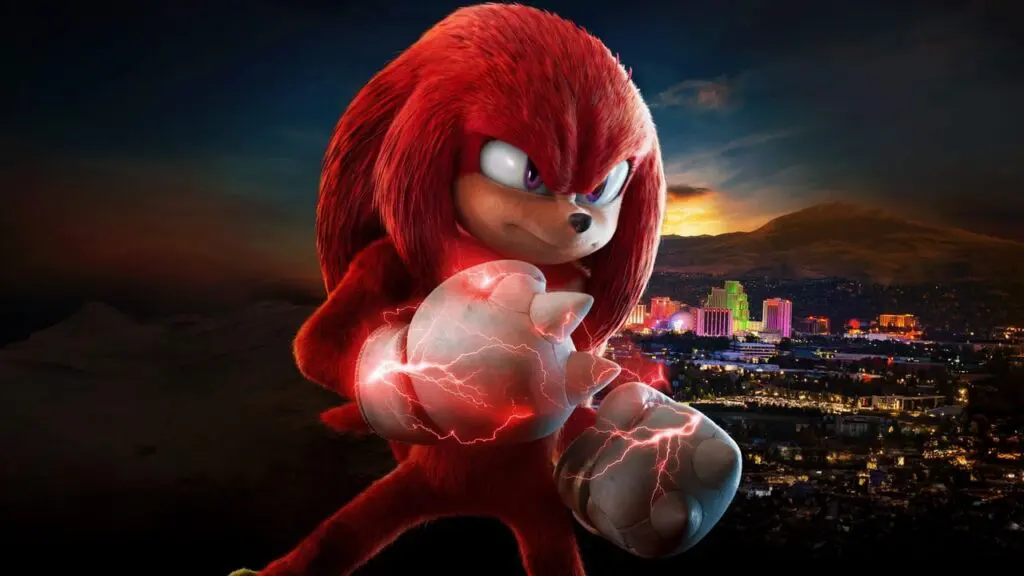
In late April, Paramount released the Knuckles spin-off series to Paramount+ ahead of the release of Sonic the Hedgehog 3. Early on, the show was poised to expand the cinematic universe of the blue blur, with a focus on how his monotreme rival Knuckles would adapt to his new life in Green Hills following his journey to Earth in the second film. However, upon release, critics and fans alike were a bit disappointed in the series, finding that the titular echidna was hardly even a focal point. Instead, the series follows him training Wade Whipple, a supporting character from the films—yes, the same Wade Whipple who Robotnik held at gunpoint in the first film—to summon his strength and win a bowling championship while fighting off danger along the way. Some found the writing to be cheesy and its character progression to be lackluster, while others have found charm in how the series expands the Sonic movie universe in its own direction yet familiar sense of style. Unfortunately, when watching through the series myself finally, I found the latter to be true.
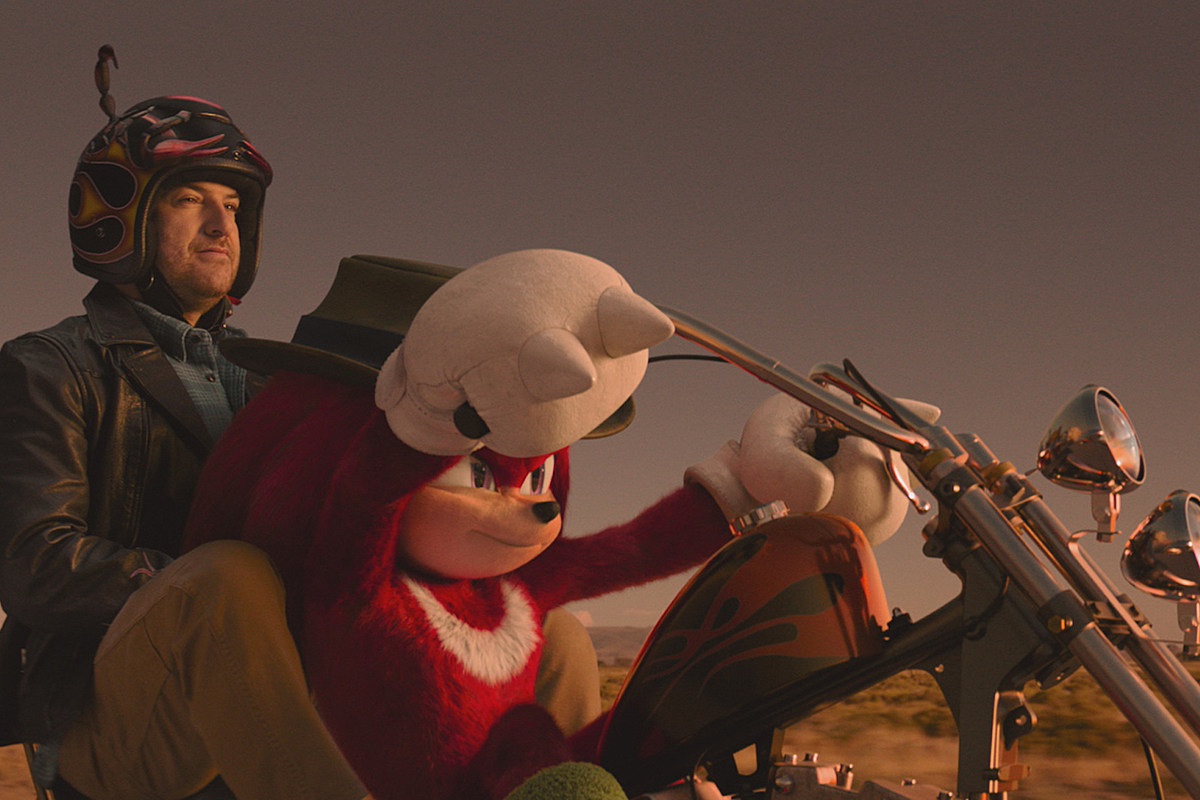
Don’t get me wrong, Knuckles has problems. I could go all day about how none of the antagonists have any staying power or that the plot without Knuckles isn’t all that compelling or, again, the fact that Knuckles doesn’t show up all that much in his own series. This narrative, though, has been done to death already by this point, so I feel there’s merit in exploring what the series actually does right. This isn’t like trying to find a silver lining in an absolutely unsalvageable situation either. There are LEGITIMATELY good moments in the series, and while cheesy at times as some will point out, it does have some charm in that regard. This is mainly due to how passionate the series feels, going full steam ahead on any outlandish ideas it cooks up. The VFX is shockingly good for a streaming spin-off series, and the inclusion of Chief Pachacamac and G.U.N. doesn’t make the series feel entirely out of place in the Sonic movie universe. While the villains could be doing better at selling their roles, those who do fit into their roles REALLY sell their lines and make their characters feel worth it. Every member of Wade’s family is eccentric like he is in their own ways, and I occasionally got a kick out of the sports commentators in the bowling championship sequence. Of course, Adam Pally does a great job as Wade himself, and Idris Elba is always absolutely electric as Knuckles.
Though, it would be a sin to talk about the strong points of Knuckles without going over the best episode of the series. It’s a bit polarizing, but I feel that those who get it will get it. Let’s talk about The Flames of Disaster.
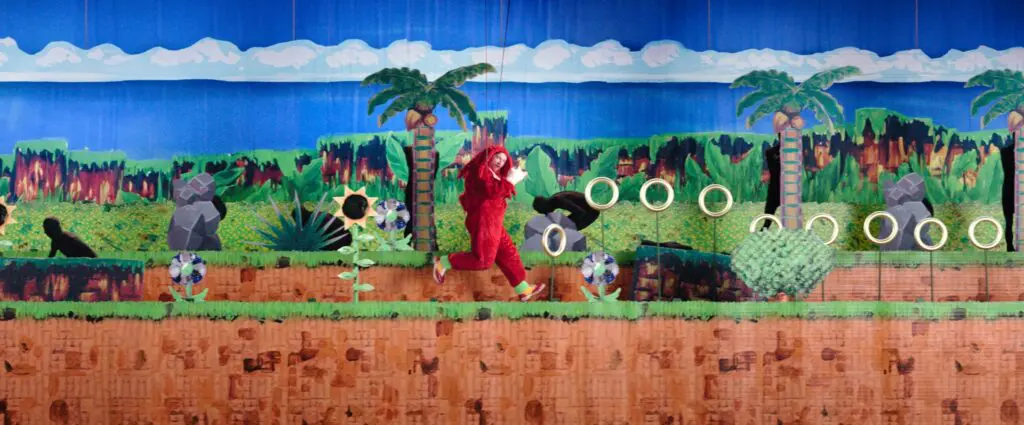
When Wade is captured by his adversary Jack Sinclair to turn him in for a cash reward, Knuckles trusts Wade will break himself free and won’t need any outside help. In a comatose state in the back of Sinclair’s truck, Wade finally has a vision of and meets the Chief Pachacamac of echidna legend. Pachacamac advises Wade that he has the power to break free on his own, he just has to unlock it. This kickstarts a multi-act theatrical rock opera epic during which Wade is dressed as Knuckles and sees things his way. He watches his father die (or a puppet version of him, rather), runs through multiple sets resembling stages from the Sonic the Hedgehog games, all culminating in Wade breaking himself free from the back of the truck.
This episode is directed by Jorma Taccone of The Lonely Island fame, and it REALLY shows throughout the entire rock opera sequence. There’s so much vibrance and passion emanating from every shot that the series’ usual cheesiness overflows in a hilariously good time. There is nothing boring to look at in this episode, as it packs so many of the crucial steps of Wade’s journey into a half-hour time slot with so much charisma and flair that it makes me wonder what the whole series would have been like had Taccone directed the whole thing.
Again, though, this isn’t to say the rest of the series is devoid of hope. Much like the Sonic movies are a bit less focused on direct adaptation sometimes, the same can be said for the bulk of Knuckles. However, the cast has charisma as they always do and there wasn’t much of an indication that things were so serious to begin with. If you sit back and coast along with the show, I think you’ll find you’re having a great time along with the characters in that world. Though, that may also depend on how many degrees you yourself separate Montana from your own reality.
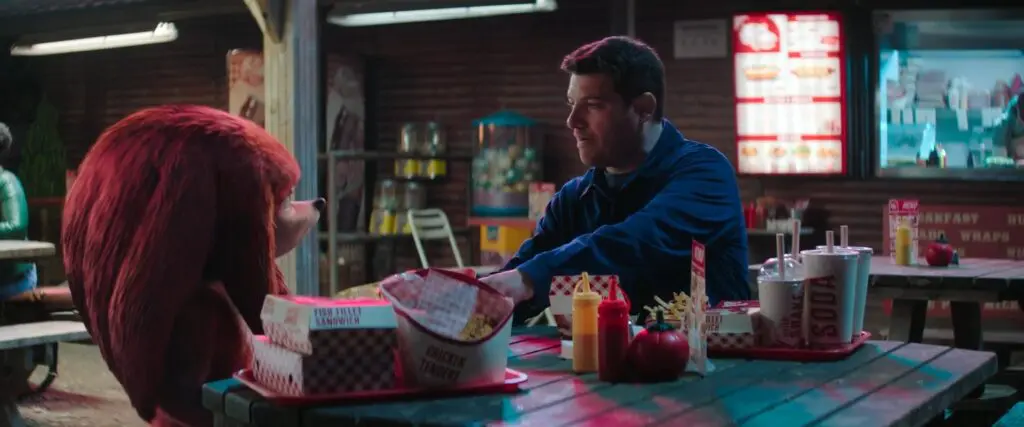
Knuckles is now streaming on Paramount+.
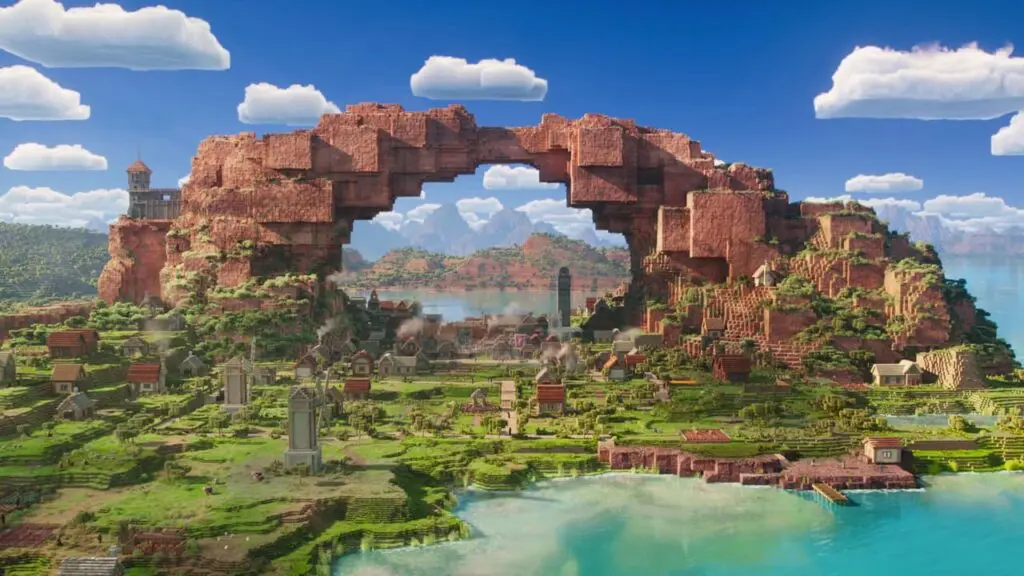
Talks of a movie based on Minecraft have been floating around for nearly a decade now, though only Wednesday morning did we see what the concept finally had to offer. Fans were met with realistic renders of sheeps, ghasts, and piglins from the best-selling game, while the humans introduced into the world didn’t look quite as blocky—rather, they looked just like regular humans green-screened into Minecraft. The reception to Warner Bros’ release of the teaser was almost universally mixed to negative, with criticism ranging from game inaccuracies to the lack of lighting and color matching on the green-screened actors. Why are non-zombified piglins in the overworld? Why does it look like a Verizon gaming commercial? The outcry was understandable, and yet it did nothing but aid the publicity of the teaser.
Let’s take the trailer for Sonic the Hedgehog 3 into account. On August 27th, we reported its view count had skyrocketed immediately upon its release. The marketing of the film had been relatively nonexistent until recently, save for a few press releases along the way, which made the immediate success of the trailer a remarkable success story. The Minecraft film’s promotion has been off the grid in a similar way that almost feels even more lowkey than what Sonic the Hedgehog 3 had going for it. We had cast member confirmations and a few statements from crew members, but aside from that we didn’t even have a first look into what this movie’s visuals were like. And yet, now sitting at 21 million views on YouTube (more than double Sonic the Hedgehog 3’s at the moment of writing, which is at 10 million), the teaser for Warner Bros’ A Minecraft Movie has at once become the internet’s laughing stock and a magnet for viewers in two days.
While we’re talking numbers, against the teaser’s 21.2 million views at the time of writing, it has amassed approximately 537,000 likes. This is by no means a small amount of positive reception, but it’s important to note this is outnumbered by a dislike count of over 970,000 at the moment, close to double the amount of likes.
In the trailer’s fallout, memes and viral tweets about the movie are running rampant, none of which seem to be saying good things. For what it’s worth, I personally think the piglin species’ designs are adapted very well. This is to the movie’s benefit, as the trailer seems to display the species as playing a pivotal role in the film’s story, though aside from this there isn’t a whole lot left to compliment the movie on. The color grading in the film is in fact as flawed as people keep parroting, and the mobs BESIDES the piglins don’t inspire anything but dread about the final release of the film. The writing (at least, what was shown in this teaser) feels uninspired and corny, but with all these factors in consideration, it’s exactly what you think it’s going to be. It’s A Minecraft Movie. It’s going to sacrifice faithfulness in favor of what Hollywood thinks makes the franchise appealing, and everyone is going to line up to see it anyway regardless of whether they’re a kid, a betrayed fan, or someone who’s neither and just wants to see how bad this thing will really be.
Going back to Sonic for a second, the hedgehog appeared terrifying and unrecognizable in his first trailer as well. After extreme public outcry from fans and moviegoers alike, however, the team brought Tyson Hesse onboard and has since brought us one of the only stable video game movie trilogies out there. I don’t think this is possible in this case, since in Sonic’s case it was just his own design. With A Minecraft Movie, this is a whole visual nightmare that fundamentally doesn’t work. Putting actual humans in a blocky world like Minecraft’s defeats the purpose of that world and is something I don’t feel color grading would even fix. You can’t make THEM blockier, because I’m not sure the world is ready for a realistic Minecraft-skin proportioned Jack Black. You can’t make the world ITSELF entirely realistic, because that would defeat the purpose of the movie being about Minecraft. Something tells me that, despite the what-ifs from countless tweets, making this an animated film outright wouldn’t have helped it either. All we can do is hope Netflix’s animated Minecraft series will fare better.
:max_bytes(150000):strip_icc():focal(734x195:736x197)/minecraft-movie-090424-3-828662aeb2ef46b9a762e1b32cf131c2.jpg)
A Minecraft Movie releases in theaters on April 4th, 2025.

From the post-credits scene of 2022’s Sonic the Hedgehog 2, those well-versed enough in the Sonic franchise were quick to notice what it teased was not a storyline from the third game in the classic Sonic series, but the second game in Sonic’s transition to 3D. Soon enough, rumors began circulating about the third movie in regards to how this storyline would be played cinematically. Talks of Hayden Christiansen or Keanu Reeves voicing Sonic’s new adversary, speculation on if the iconic “Live and Learn” track from Sonic Adventure 2 would appear, and the first trailer’s appearance at CinemaCon only helped fuel the fire. Releasing in the final stretch of 2024, fans waited and WAITED for any clips, screencaps, or even leaks of the movie’s materials, but Paramount seemed to be as careful and vigilant as ever to make sure everything was under wraps until this Tuesday. After months of radio silence, mysterious visuals from the Sonic series appeared around the world on Sunday on various large screens.
After the internet ran rampant with rumors and speculation, Paramount would confirm the following day that the trailer would be releasing on 9AM EST on Tuesday. In under an hour, the first trailer for Sonic the Hedgehog 3 would garner over a million views across platforms. After his brief appearance at the end of the second film, fans of the films and games alike finally got to see Sonic’s new (or familiar) foe, Shadow the Hedgehog, in action. Immediately, eagle-eyed fans noticed many parallels between the film’s contents and some of the games released during the sixth generation.


The trailer revealed two key members of the Robotnik family, Gerald and Maria, would appear in the film as portrayed by Jim Carrey and Alyla Browne respectively. Those familiar with the Sonic Adventure series know well that these two characters are crucial to the key narrative of the second game, and will no doubt play a major role in Sonic the Hedgehog 3 given how much it takes from the game. As many hoped, “Live and Learn” from Sonic Adventure 2 did play in the latter half of this trailer, albeit in a more cinematic and score-y form arranged by Tom Holkenborg, the composer of all three Sonic films. However, this was not the only sixth-generation Sonic entry the film seems to take a lot of cues from.
Twitter user @UltimaShadowX was quick to point out—and edit together—the parallels between Shadow and the G.U.N. fighting in the trailer and a similar scene from 2005’s Shadow the Hedgehog. While the game released after the discontinuation of the Sega Dreamcast, it released within the same timeframe as other pivotal Sonic titles the film takes from, and may be even more important than it lets on in this trailer. One of the constant rumors circulating is that the film will be rated PG-13, but is this for the sake of more fleshed out fight scenes and dialogue or so that Shadow can swear a few times as he does in his titular 2005 release? While we’re still on the topic of Ultima, however…
He was also quick to notice the incorporation of Sonic Adventure 2‘s Chao Garden minigame in the film, though not in the traditional sense it appears in the game. Instead, the Chaos appear to be represented by a live house venue act, or possibly a Chuck E. Cheese’s influenced restaurant. I’m leaning towards the former since they seem to move a bit more fluidly than animatronics, as if humans in costumes. However, if this takes place on Earth rather than some other dimension through Sonic’s rings, some fans fear it may deconfirm Cream the Rabbit’s inclusion in the franchise moving forward, as the “lead” of the Chao Garden band looks identical to Cheese, her Chao partner in-game. Anyway the wind blows, I find this as a great and funny way of including even Sonic Adventure 2‘s minigames in the film. This begs the question, though—does this mean Big’s Big Fishing Adventure is on the table?
Sonic the Hedgehog 3 releases in theaters December 20th, 2024.
Get Some Strange!