








This weekend saw the release of Neon’s Hokum, starring Adam Scott in the starring role as disengaged writer Ohm Bauman. Arriving at the site of his late parents’ honeymoon to spread their ashes, he soon realizes the guests within the hotel are not what they seem, least of all the presence wandering the honeymoon suite.
The way this film keeps its audience suspended in tandem with its protagonist feels like a breath of fresh air. A chill ran through the theater during my screening every time Ohm eased closer to a space he was taking a risk on. Any jumpscare sequence throughout its runtime isn’t exactly graphic, but this was also what I found so unique about it. Like Ohm, we know well that something lurks within the chambers of the honeymoon suite, and when and where they might rear their head next is anyone’s guess.
What I took away from Adam Scott’s dramatic role in this film alongside his work in a series like Severance is his ability to play a flawed character you don’t quite root for, but certainly don’t root against. Hokum keeps its audience guessing as to what secret any given character is hiding, including Mr. Bauman himself.
Even as whispers of the truth behind the hotel keep slipping through the cracks, I never found many of the twists and turns the film took to be cliché or predictable at all. One discovery leads into another realization, all the while utilizing or re-introducing a clue you may have overlooked before.
Shooting this film on location in Ireland definitely helps bring the whole thing together. The way the characters discuss Irish folklore makes it feel as though this whole section of the country is teeming with secrets and supernatural energy. I wanted to know what lay beyond the hotel and nearby forest as much as the hotel’s bartender or the homeless man in the forest.

Since its release last Friday, Hokum has already made back its $5 million production budget. In an interview with RogerEbert.com, Adam Scott described his portrayal of Ohm in the film as somewhat method, which may explain how close the audience reaction to its unease flies to Mr. Bauman’s own. Being a “skeptic” just like his character, Scott mentioned “being a stranger in a strange land came somewhat naturally” as he also explored the film’s setting for the first time.

Hokum is now playing in theaters nationwide.
This month on our sister site Galxy, we’ve got a brand new slate of movies for all our readers (and viewers) to check out, spotlighted from May 1st. Our monster collection comes to life with classics such as It! The Terror from Beyond Space, leading right into more galactic flicks like Dark Space. Here’s our full list!

Wow Signal
Based on a true story, Wow Signal documents the titular radio signal detected in 1977 from the Big Ear radio telescope deep in outer space. The transmission has sustained the search of many extraterrestrial skeptics for years since its initial (and only) broadcast throughout the cosmos.
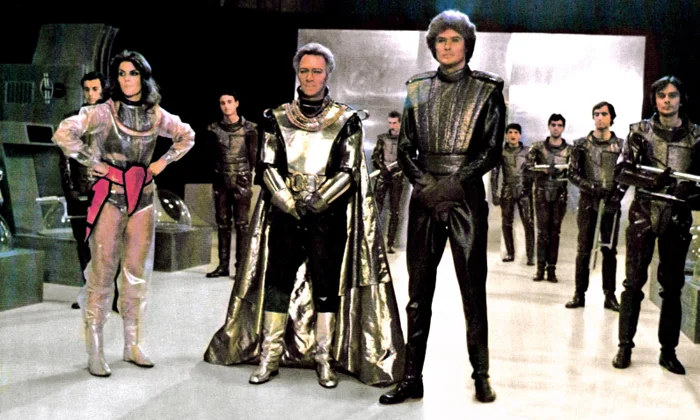
Starcrash
This space opera stars Caroline Munro and David Hasselhoff among an ensemble cast, released following the science fiction boom brought by George Lucas’ Star Wars. Will the Count’s army prevail, or will the Emperor strike back against them?
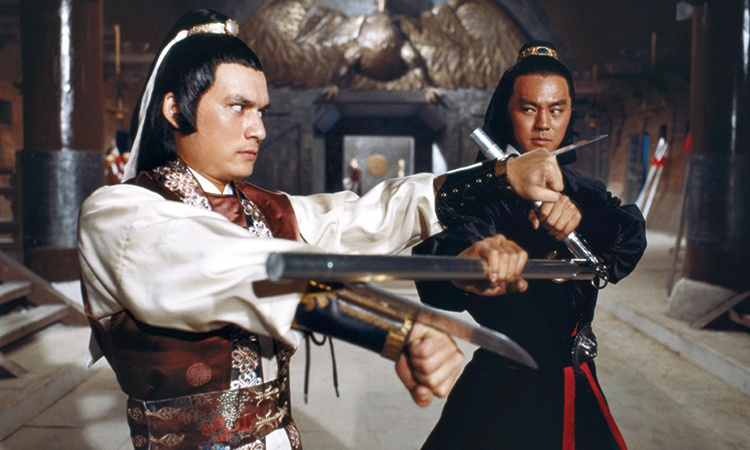
The Avenging Eagle
A wuxia classic produced by the Shaw Brothers, starring Ti Lung as Qi Mingxing, an ex-bandit in training leaves his life of projected crime behind following a rescue by his mentor’s adversary. Joined by a man seeking to avenge his family’s murder by the bandits, the two choose to confront the bandits and Qi’s former mentor.
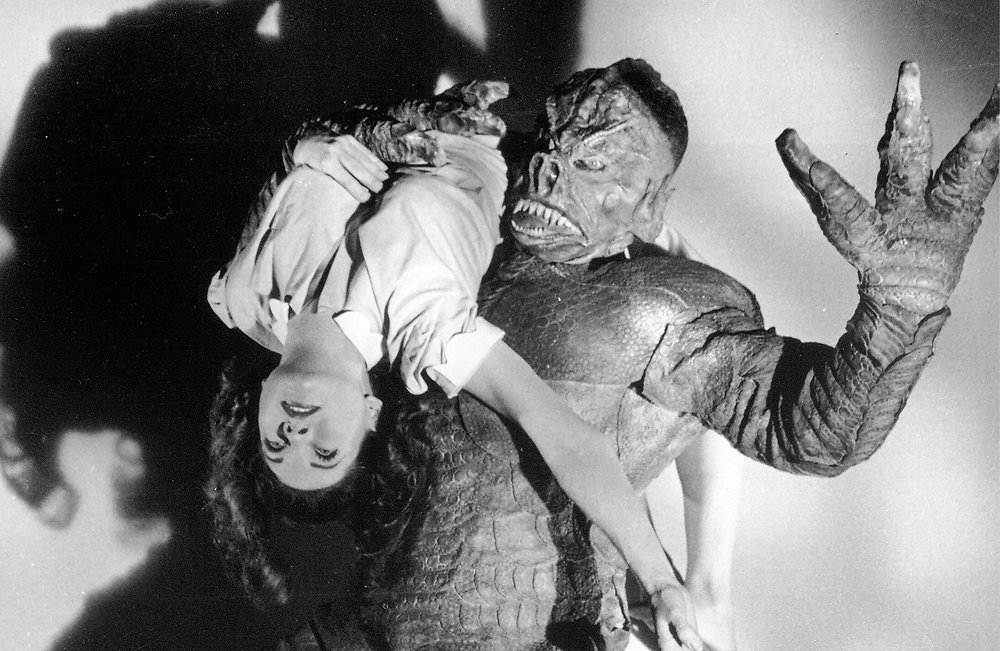
It! The Terror from Beyond Space
This 1958 indie classic takes you to Mars with a reconnaissance crew, the second sent to the planet, scoping out the fate of who came before them. When a survivor comes forward with his series of events, the recon crew is skeptical until it quickly becomes apparent they aren’t alone, whether on the planet or their own ship.

Shapeshifter
A maximum security prison holds a titular shapeshifter, a predator by nature whose hunt knows no bounds. When he breaks free, it’s every man for himself within the prison’s confines as some attempt to band together to use the creature’s secrets against it.

Female Werewolf
Written, directed, edited, composed, and shot by Chris Alexander, Female Werewolf starts in an office but ends wherever She (Carrie Gemmell) finds herself. Convinced of her transformation into a werewolf after many rude awakenings, She must balance her everyday office life and the now horrifying revelation she must explore in secret.
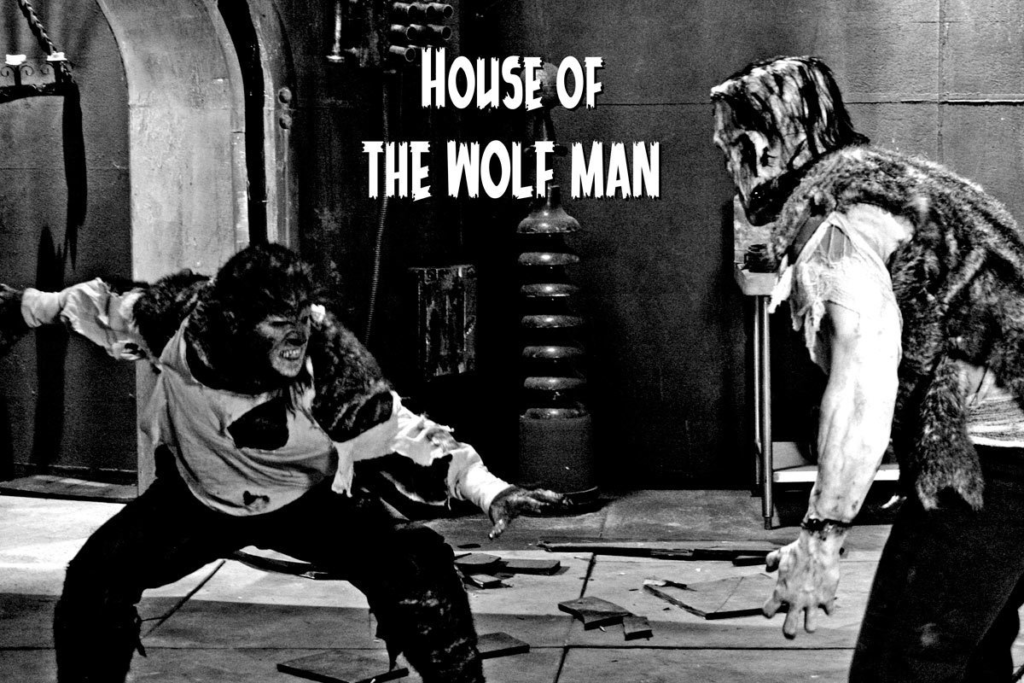
House of the Wolf Man
Don’t be fooled by the thumbnail! House of the Wolf Man is a 2009 indie monster flick shot in tribute to classic Universal Monsters films. Ron Chaney stars as Dr. Bela Reinhardt, a mad scientist who’s devised a cruel game to decide which of his five guests will inherit his estate. Chaney’s family history is rich with Universal Monsters cred, with his grandfather (Lon Chaney Jr.) and great-grandfather (Lon Chaney) both starring in the original film series.
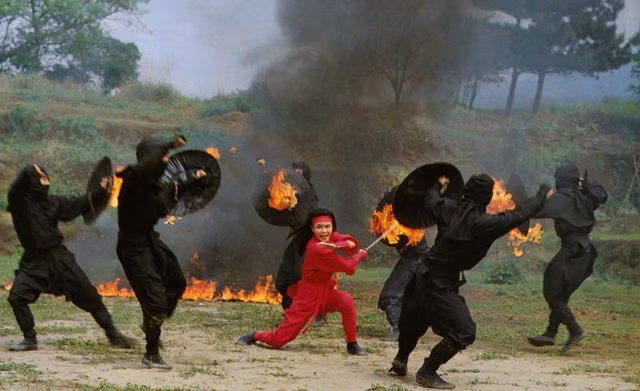
Challenge of the Lady Ninja
During the Japanese occupation of Shanghai, China during World War II, a woman named Wu Shiau-kuei (Yang Hui-Shan) trains herself in covert arts. When she learns her brother is aiding the Japanese in Hong Kong, Wu assembles a team of female fighters to stop him.

Buck Rogers in the 25th Century
Also being developed in the wake of Star Wars‘ success for space epic cinema, Buck Rogers stars Gil Gerard as the titular man transported over 500 years into the future by complete accident. When he learns Earth is on the brink of invasion and conquer, what else can Buck do but join the resistance as its newest (or oldest) unexpected member?
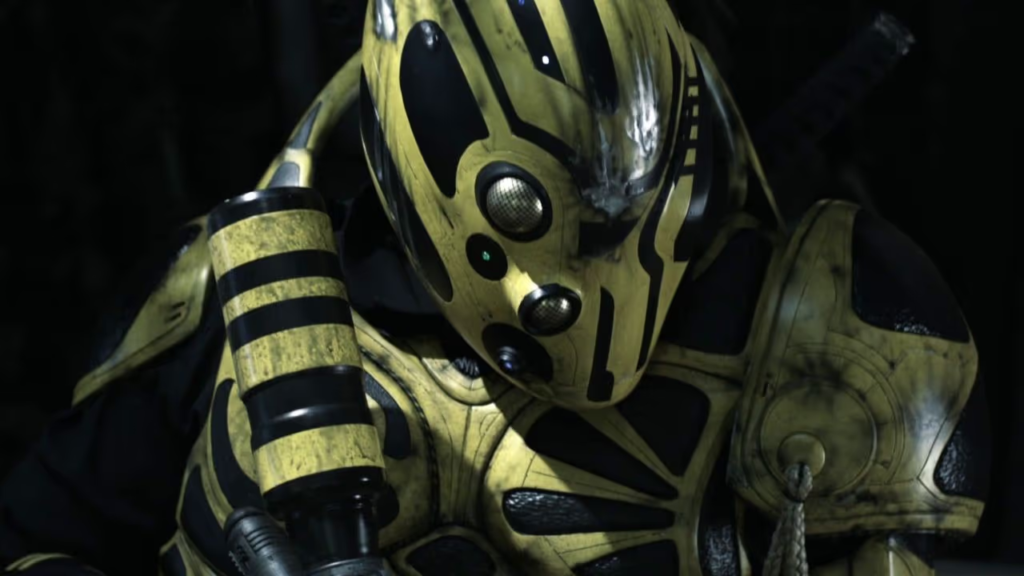
Dark Space
After six friends far in the future rent a spacecraft for the holiday, they find themselves crash landing on an uncharted alien planet. What’s worse than being stranded in space? Being hunted. The crew now find they’re all they have to stick to as they try not just to survive, but to escape.

13/13/13
In a world where a day has been added to the calendar every four years, on the titular date all of humanity turns demonic. All… except leap year birthdays. The minority of these leap year miracle workers now must face the music together as they face the demons of humanity.
These spotlighted films for the month of May can all be viewed now on Galxy. Safe travels!
On Friday, Netflix released Apex, its newest survival thriller directed by Baltasar Kormákur and penned by Jeremy Robbins. When hobbyist climbing couple Sasha (Charlize Theron) and Tommy (Eric Bana) get caught in a storm atop a wall in Norway, the latter loses his life while Sasha survives. Months later, she travels alone to Wandarra National Park in Australia—the late Tommy’s homeland—meeting a peculiar figure named Ben (Taron Egerton) along the way. Soon on the run from Ben, Sasha faces both her past and present threatened by the predatory presence lurking in Wandarra’s woods.
The concepts presented in this film aren’t nearly as primitive to me as they might’ve been about a year ago. Not the grieving parts, but climbing. Bouldering is great fun, and I can definitely see the foundation of why someone would seek a thrill from a more treacherous climb with much looser (or nonexistent) guardrails. Maybe, in Sasha’s case, the adrenaline of the climb itself would even overpower any in-the-moment grief and memories that may come to mind. Unfortunately, I found the climbing not to matter very much at all in the long run in this movie. There are exactly two climbing scenes in Apex, one at the beginning and one at the film’s climax. In fairness, it’s not the longest film, but with how core the hobby seemed to her and Tommy’s life (as well as the film’s title), I did expect it to focus more on that.
Though, you know well by this point Apex does not refer to a peak but the predatory Ben, a cannibalistic Australian who joins an unwilling Sasha on her trek through the wilderness. I didn’t quite find the two to have the rapport that would’ve made the movie work for me more, but their dynamic was inoffensive overall—just a bit lacking in depth between the apex (pun intended) of the movie’s thrills.
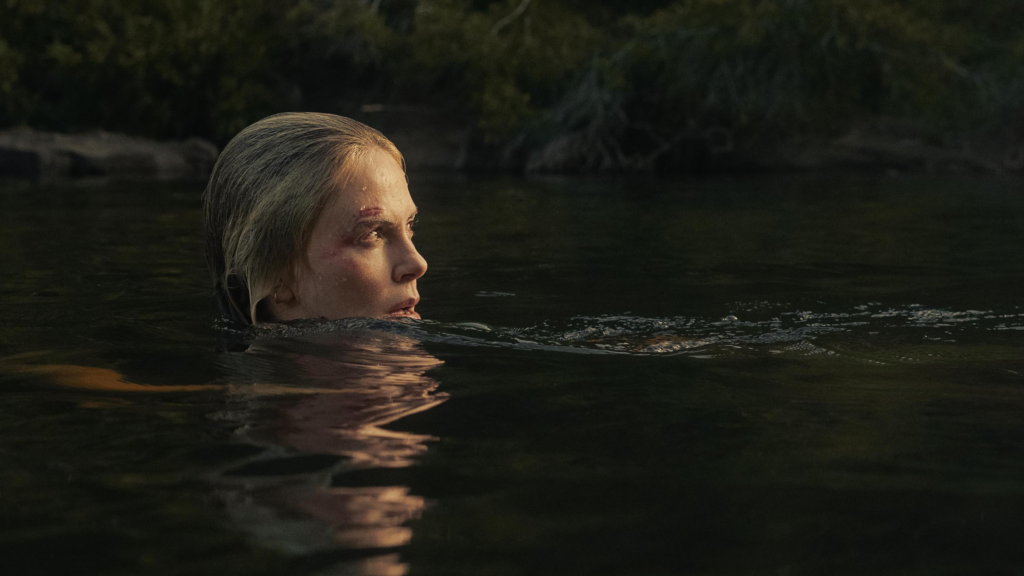
Apex is now available to stream on Netflix. If you want more thrilling wilderness chase movies like this, check out White Raven on our parent site, Galxy!
The “stoner comedy” is a subgenre often left out of its respective category’s discussion, though the narrative style is far from dead as seen in Brian McElhaney and Nick Kocher’s Pizza Movie, recently released to Hulu and Disney+. Given the movie’s premise, I thought no film better to start the week reviewing than this one.
Pizza Movie stars Gaten Matarazzo and Sean Giambrone (Stranger Things, The Goldbergs) as roommates Jack and Montgomery, two ostracized college students in danger of a transfer to Gralk Hall. Said dorm is essentially the final nail in the coffin for anyone enrolled. In search of something new to help decompress, the two discover a tin of unmarked tablets to provide a relaxing high, so long as it’s supplemented with pizza. Navigating the perilous halls of their dorm while avoiding any trouble at the hands of their RA, the boys go on a journey that takes them anywhere but the food delivery automaton at the front door.
The film’s marketing was subject to something of a takeover online—screencaps of the film’s trailer only captioned with “IM GOOD BRO” implied feelings that seemed to resonate with many people on Instagram, X, and other social media platforms. McElhaney and Kocher themselves seemed puzzled by the image and its many variations, though it all came down to its actual reception upon release. While Pizza Movie won’t set the world on fire, I found it to be probably the most well-rounded and engaging stoner comedy I’ve seen in years.
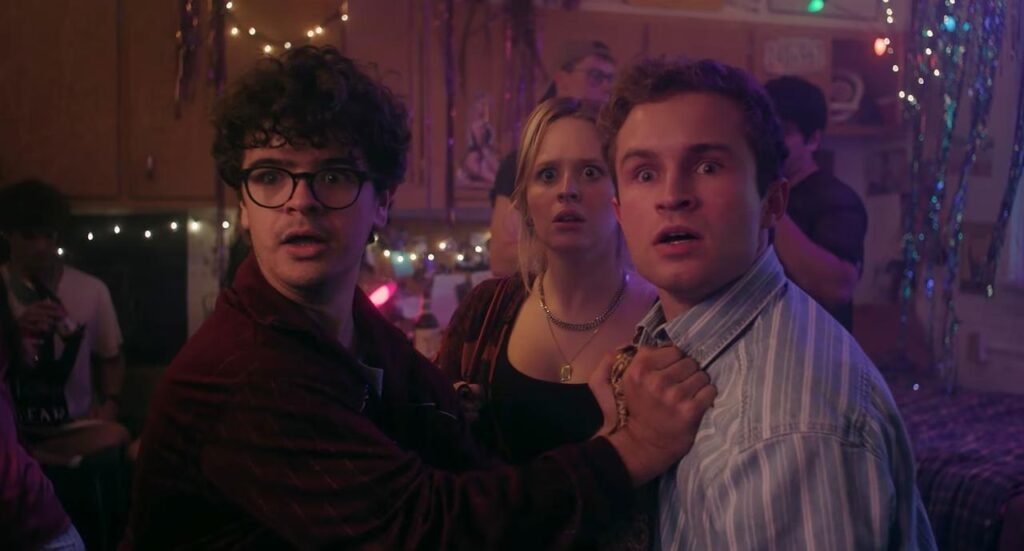
Pizza Movie‘s hallucination sequences contain some of the most creative and innovative shots and concepts I’ve seen in a subgenre not known for much besides cheap laughs. The premise introduced at the beginning for Jack and Montgomery adds an underdog aspect to the story that keeps the audience hooked on what will become of the roommates. The telltale third-act breakup does feel earned as well, Matarazzo and Giambrone’s acting really selling the problems one character has with the other like they’ve been dealing with them their whole life.
The film is never super deep, though—it treats its audience like they’re more intelligent than most stoner comedies would, but the keyword of the subgenre is still comedy (depending on who you ask). Inventive as the hallucinations are, or each next phase of the drug shifting over from the last, some elements of the film feel random for the sake of randomness. I will say the parts that lean the heaviest into this chaos are in the first introduction to the drug’s effects, so the following phases of the drug don’t break the immersion as much as those early parts would if moved later into the film. At the same time, though, when some of the earliest parts feel like the peak, it makes the rest of the film feel like it’s Jack and Montgomery coming down from the high, so narratively it still makes sense the way it’s formatted. Again, it’s not that deep, but analyzing this in the same critical vain as any other movie will make some cracks start to show.
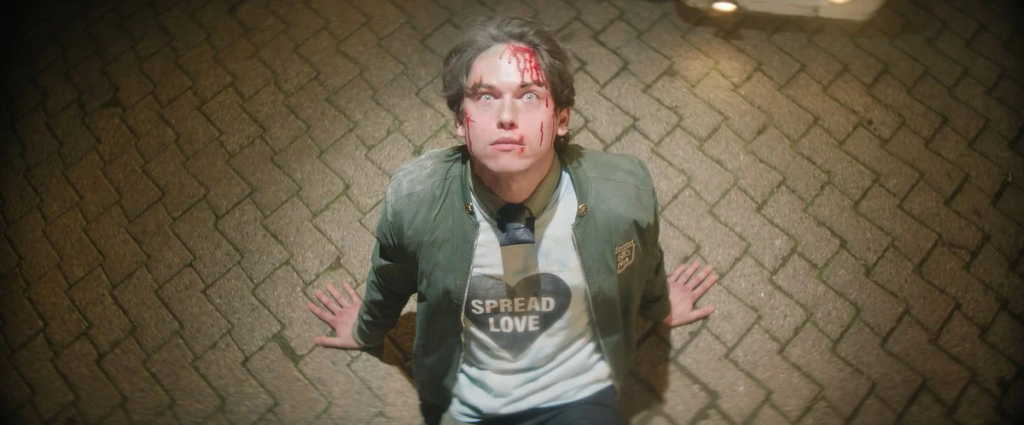
Pizza Movie is an addition to the long list of stoner comedies that I would argue pushes that type of storytelling in the right direction. At once, it combines the long-winded journeying nature of a series like Harold & Kumar but grounds it in reality by containing the high within the same building the movie starts in. It takes the viewer as many places as Jack and Montgomery, being meta and weird and funny and puzzling at the same time. And yet, the amount of devices employed by the subgenre here never feels as overwhelming for the audience as it does for its main characters. And given the day of the year, you won’t find a better movie this year to eat pizza along to while couchlocked.
Pizza Movie is now streaming on Hulu and Disney+.
It’s a tale as old as time: throughout a new wave of anime seasons, one you’ve never heard of catches your attention with near unanimous acclaim from everyone who’s looked its direction. This once happened to me with Jujutsu Kaisen. Then, with Blue Box. Now, Frieren: Beyond Journey’s End has finally presented itself to me, after much vouching from several close friends. I’m happy to report that Frieren has passed the test with flying colors. This beauty of this series cannot be understated, and here’s why it’s important for you to catch up before its third season premieres in October of next year.

Frieren presents itself as another anime with RPG elements following a party of various classes on a quest. However, the important plot beats lie in the characters’ interactions with each other and how they both learn, the pacing showing both sides of this growth. The party the series follows is actually the mage Frieren’s second party, following her first whom she accompanied to slay the Demon King. As we’re shown throughout her travels with the second party, there was much about humanity Frieren took for granted in the moment. Being an elven mage with a lifespan of over 1000 years, the way Frieren processes a regular human interaction or even just views it works much differently from someone with a normal mortal lifespan. When Himmel, the first party’s hero, passes away, Frieren vows to spend the rest of her time understanding humanity now that she’s lost the chance to better understand the ones she’d already grown close to. Now joined by her fostered apprentice Fern and the young Stark, a mage and a warrior respectively both looked after by former party members, Frieren begins her journey to Aureole. Said to be every soul’s final resting place, Frieren travels with the two to look back on her expeditions with the hero party in hopes she may see Himmel one last time.
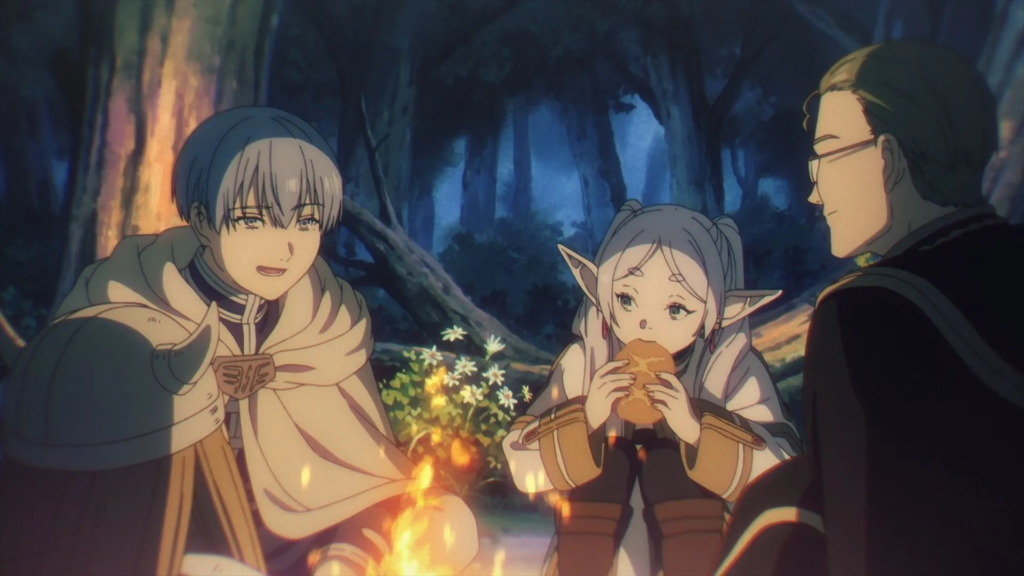
That may have been a mouthful, and admittedly sounded like a bloated story to follow even for me when I first picked up the series. However, you as a viewer are never thrown right into the madness from the start of any given episode. The whole rhythm of Frieren never feels frantic or fast-paced, which is fitting given the setting of the mage looking back on the land she’s already come to know through the hero party’s triumphs. Every episode takes it slow, letting the viewer get to know the party as the party gets to know each other. This is by no means a boring approach, as each aspect of Fern, Frieren, or Stark explored in a given segment keeps the viewer engaged with just how human it makes them feel, even the elven mage. I’d argue her strides are the most important, not just because of her main character status. Setting out on this journey to understand humanity, the viewer gets to watch as Frieren shares much more with the human race than she ever thought possible.

Going back to Blue Box, Frieren has probably the most consistently beautiful visuals that elevate its emotional stakes since the sports anime wrapped in March of last year. Each strand of hair moving in the wind, every subtle change in a character’s expression is something a viewer will pick up. No matter the surface-level significance of one of these cuts, the emotional resonance in the show can be enough of a slow burn that you’ll pick up a habit of watching all intently. As the show progresses, the dynamic between the party feels less like a dynamic and more like each of them is a moving cog that requires each other to function. It’s far from the clearest-cut example of the found family trope I’ve seen in a show like this, as each member of the party has their own complicated history with a family. Fern and Stark were both raised by different members of the hero party when they were young, though both were orphans of war.
Both seasons of Frieren: Beyond Journey’s End are now available to stream on Netflix, Disney+ with Hulu, and Crunchyroll.
Nintendo’s newest collaboration with Illumination took form in The Super Mario Galaxy Movie this Wednesday, the sequel to 2023’s The Super Mario Bros. Movie that’s already taken the record for best opening night of 2026. For a series that doesn’t often focus on characters’ feelings beyond a surface level, I thought the first movie was better than expected. Though there was room for improvement, my expectations for a new and improved sequel were very high (along with many others) when Nintendo announced its title in a direct presentation last September. The Super Mario Galaxy Movie was unveiled as the centerpiece of the Super Mario Bros. series’ 40th anniversary, named after one of the most celebrated titles in the Mario series, one of the highest-rated games for the Nintendo Wii, and a favorite title from gamers the world over.
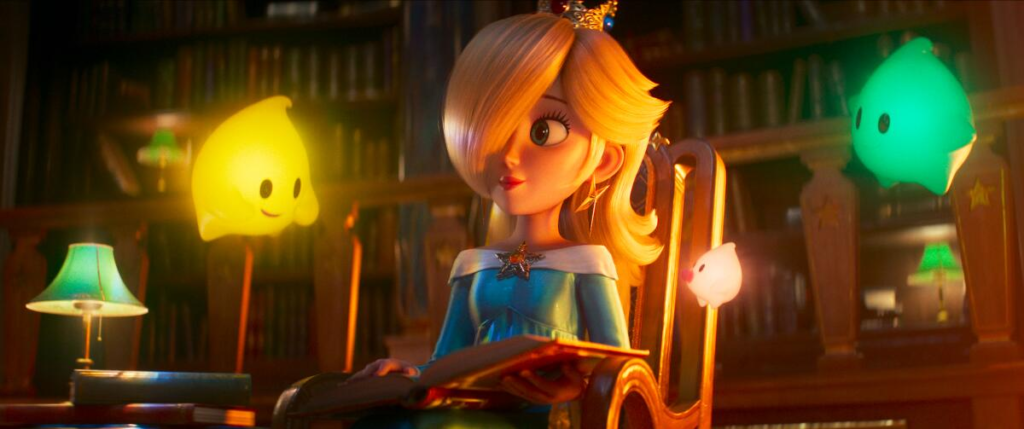
When choosing to name a video game adaptation movie after a specific entry in its respective series, there’s a level of expectations people want met. In most cases, it’s been a numbered sequel that fans argue needs to incorporate what that sequel to the original game added. Sonic the Hedgehog 2 adapted the rest of the games from the original trilogy, with Sonic the Hedgehog 3 focusing on the fan favorite Sonic Adventure duology. Five Nights at Freddy’s 2 may not have been everything everyone wanted, but it at least remained focal to the second game in the Five Nights at Freddy’s series with toy animatronics and the exploration of the Afton family tree. The Super Mario Galaxy Movie leads with Rosalina and the Lumas, but wanes off pretty quickly in favor of reframing the narrative on the main Mario cast; Mario, Luigi, Peach, Toad, Yoshi, and Bowser.

In this regard, it’s great someone like Luigi finally gets more screen time. I found myself agreeing with many others who felt his presence in The Super Mario Bros. Movie was surprisingly sparse given the “Bros” in the name. But even though Mario and Luigi work together again like with street-level affairs in the first movie, the writing does feel a bit less grounded here. The brothers’ Brooklyn heritage felt key to how they reacted to this new world around them, so seeing them already so comfortable with their surroundings (especially with the fate of the universe now being at stake) does kill the immersion a bit. I also felt this way about Yoshi’s integration with their dynamic, finding the dinosaur in a pile of rubble and soon after living alongside him like he’s a third brother. It’s not like he can’t be that—I think sort of a watchful caretaker role would have worked well given the Yoshi’s Island influence—but I feel we as an audience are thrust into that dynamic way too soon without showing how the brothers got to know Yoshi that well. This is even lampshaded by Toad early on, questioning how Yoshi “just shows up” as a part of the team.
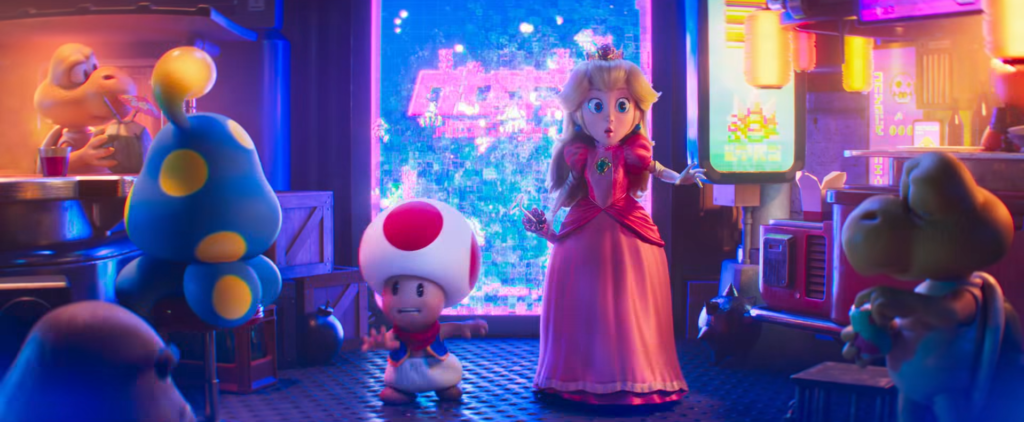
Peach and Toad’s journey across the universe was something I found myself drawn to more than I expected, having an equal balance of urgency and fun easter eggs to spot. Luis Guzmán’s performance as Wart was a highlight for me, and I loved the way the entire sequence recontextualized both the underground levels and the roles the characters from Super Mario Bros. 2 would play in a universe like this as opposed to just a dream like in the original. Though, the impact from a lot of these sequences in Peach and Toad’s plot doesn’t often linger longer than a couple scenes. There is a greater narrative being told that’s ultimately more important to Peach than anything else (and some diehard fans may not like the resolution), and if anything in her plot maintains momentum, it’s that. Even with what’s at stake for her, I felt there probably should have been a more emotional side of the story being told. Peach already tackled a threat with confidence in the last movie, and it would have made much more sense if she took a moment to be vulnerable, like Mario did in the first movie during the final fight in Brooklyn.
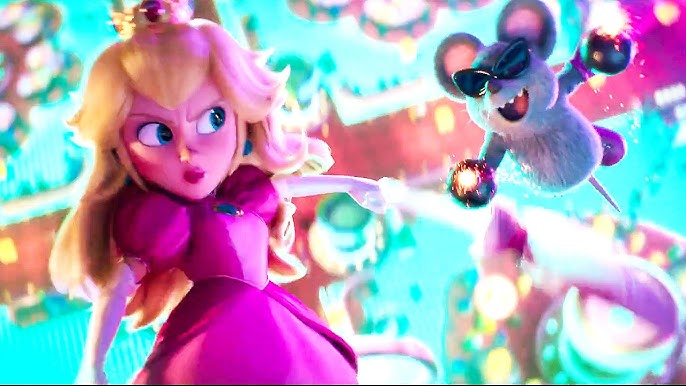
There’s plenty of cameos, references, and easter eggs to spot even for Nintendo fans unfocused on the deeper cuts in the Mario series. Many question if this is leading up to a Super Smash Bros. film adaptation, and if you go and see the film, it’s probably just going to reinforce the speculation even more. As inevitable as that sort of thing feels, I personally felt like putting that in the back of my mind during scenes that had that kind of air to them. Super Smash Bros. is a celebration of video games as a whole, and in a way The Super Mario Galaxy Movie feels like another kind of celebration in regards to the medium. Like Sonic the Hedgehog 2, it directly takes inspiration from many more games in the series than the one it’s named after. No matter which Mario game you remember fondly growing up, there’s going to be something for you here.
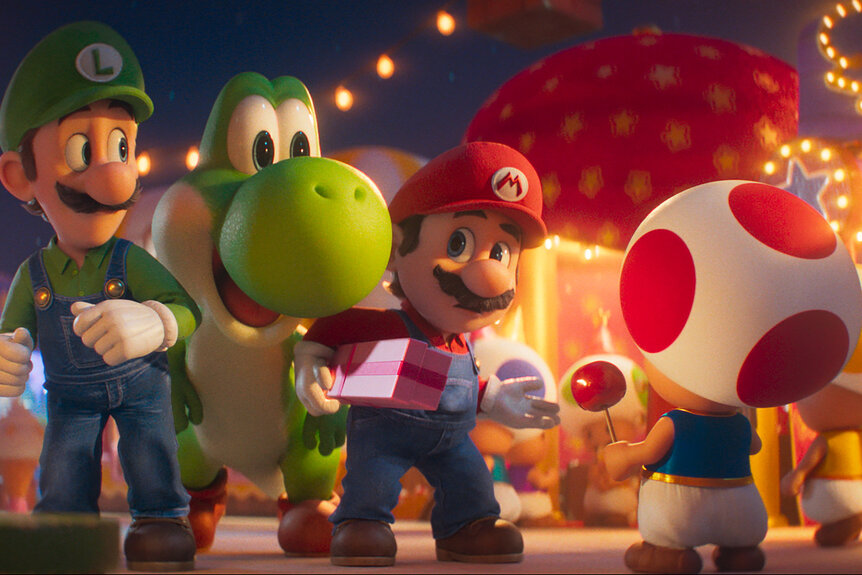
The Super Mario Galaxy Movie is now playing in theaters worldwide.
Get Some Strange!