


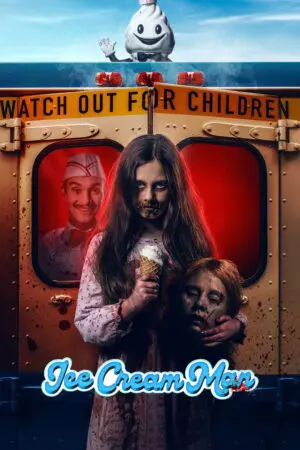

If you missed out on AMC’s previous Scream Unseen screening, you dodged a major bullet and I envy your position. On Monday, August 3rd, 2026, AMC gave audiences an advance screening of Eli Roth’s Ice Cream Man ahead of its official release date this weekend. It’s an unrated horror splatterfest where the titular ice cream man turns the children of Bayleen Bay into psychotic vessels who turn to murdering the adults of the town.
Here’s what we wanted the mystery movie to be going in:
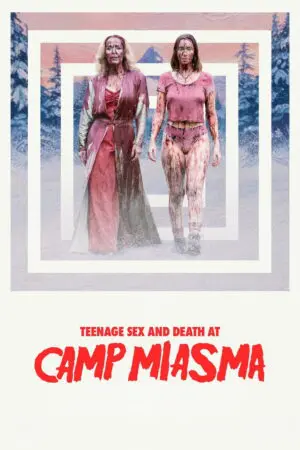
- – Jane Schoenbrun’s Camp Miasma
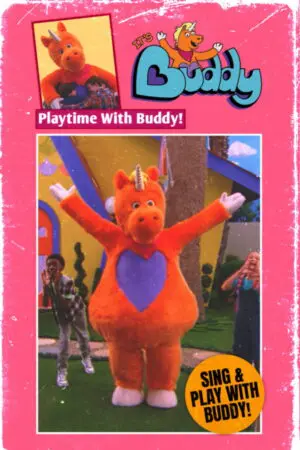
- – Casper Kelly’s Buddy
- – Not Eli Roth’s Ice Cream Man
As soon as the film opened with Roth’s foreword, everyone I came with let out a sigh of disappointment knowing this was the reality of the situation. I’ve heard talk of people who walk out of the Screen Unseen events when it’s not for them, and while I understand—different strokes for different folks—it’s always personally been my policy to see a movie through to the end in the theater. The atmosphere around you plays into that special feeling you just don’t get watching something at home. This was the first time I ever considered walking out of a movie in the theater. And no, it wasn’t because the movie was grotesque. It wasn’t the excessive levels of gore and violence. It wasn’t the subject matter at all. Plain and simple, this is one of the worst movies you could spend money to see.
Just a waste of time all around. It felt like over half an hour passed by the time we barely reached the fifteen minute mark. This movie drags the hell out of a premise that never held much water to begin with and never believed in itself enough to warrant anyone being invested in the stakes. Except, apparently, for the guy sitting left of our group who seemed to be the biggest (if not ONLY) Eli Roth fan in the room. This? THIS is what you applaud? My friend liked Eli Roth’s Thanksgiving and retroactively lowered it one star on Letterboxd after we exited Ice Cream Man. This is absolutely no hill to die on. I could count everything I liked about this movie on one hand—no, one finger. There was one joke that made me laugh in the first 20-25 minutes. That was the only thing I ever felt besides complete boredom and suffering.
I can handle a film that’s very self-aware in how bad it is and how fundamentally it does not work, but this just felt like such an insult to the medium itself that any possible attempt at self-awareness just bounced right off everyone in the theater. You’ve definitely heard by now that the film uses AI-generated visuals in certain sequences, when some of the children have speech-bubbled thoughts depicted in the style of rubber hose animation. It’s such unbelievably blatant AI slop animation that it takes you out of the whole thing, it was so immediately recognizable I’m shocked Eli Roth tried to pass it off as hand-drawn. Generating animation like this has a look that’s unrecognizable as anything but AI slop. It definitely couldn’t have done that much more to the budget to have a small team of guys who know what they’re doing and making like 4-5 short animations in that style for the film. THAT’S it. That’s the SMALL amount of scenes it was used in and they still decided that would’ve looked better and appealed to more people. At that point, why even have animation bits cut in at all? A number of them were confusing and didn’t fill anyone in on what was going through the kids’ heads.
My browser froze for like a minute when I was trying to insert that link up there. This movie sucks so hard my PC doesn’t want me typing about it anymore. I use these keys for writing entertainment news, movie reviews, and Big Walk. Ice Cream Man does not qualify as a movie. It’s a stain I don’t think any director, actor, or producer would want on their filmography for the rest of their life. Even on a night where someone sits down on their couch, browsing streaming services for a bad movie to throw on, I can’t imagine a reality in which this is anyone’s choice. After this movie exits theaters, I expect a quiet shelf life for it on Tubi or Fubo or something before it fades into obscurity, Out of service, like I hope to one day find the career of Eli Raphael Roth.

This is the part where I’d tell you Ice Cream Man is now playing in theaters nationwide, and I still will… because it is. Go see Tony instead though, or Camp Miasma or Buddy when they come out. Just please spend your time and money on anything but this.
Written by D.S. Foster
Edited by J. Nagle
Cinema as a singular event… Christopher Nolan, Hollywood’s most dependable manufacturer of prestige-slop, should have exhausted his commercial mythology by now. Following the theatrical coronation of The Dark Knight, the Oscar benediction of Oppenheimer, the “Barbenheimer” evangelization of moviegoing into social-media crusades, and of course, the sacrament of Interstellar in the hearts of emotionally constipated men everywhere, what kingdom is left for him to claim?
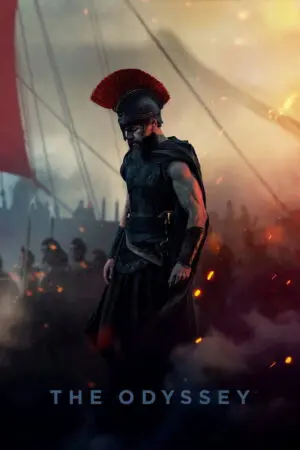
The Odyssey answered with $264.1 million worldwide, eclipsing Nolan’s previous debuts and every other R-rated release this year. Second now only to Marvel’s catalogue giant, Spider-Man and his Big Day Out or whatever… I’m just kidding, those movies are fine. The number matters less as another laurel for Nolan than as an indictment of an industry incapable of recognizing the audience’s appetite for depth—for films of enduring cultural value.
Hollywood’s supposedly safe investments have exposed the fraudulence of franchise logic: sequels, remakes, and interconnected product lines increasingly resemble the residue of a creatively exhausted system. Nolan offers an expensive but persuasive alternative. A proven filmmaker, charismatic performers in practical danger, immense physical scale, and images worth leaving home to see can still generate collective excitement.
Hollywood will welcome the film’s success and almost certainly misunderstand it. The lesson is not simply to finance more tent-pole epics or imitate Nolan’s aesthetics, but a broader principle to invest in filmmakers rather than properties, cultivate anticipation rather than flood the market, and treat visual grandeur as an artistic instrument instead of a promotional adjective.
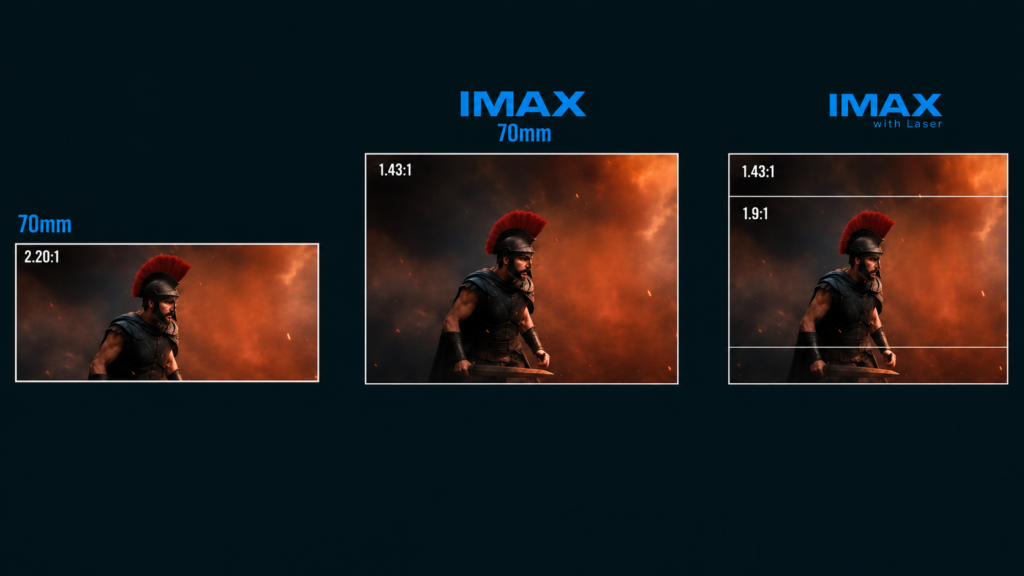
The Odyssey succeeds through a union of high culture and mass sensation that Hollywood’s marketing departments usually regard as incompatible. Homer supplies intellectual legitimacy, Nolan’s celebrity-auteurship supplies commercial viability, and spectacle supplies the decisive promise. Photographed by Hoyte van Hoytema in open-matte IMAX 65mm, the film makes theatrical exhibition inseparable from the work. Nolan has long wagered audiences will pursue experiences streaming cannot flatten into the convenience of the home. Projection, photographic craft, sound, and physical magnitude become part of the drama’s meaning.
Nolan against Homer and critics against Nolan… Homer’s Odyssey casts the human condition as a struggle toward home. Odysseus returns from Troy through erotic distraction, monstrous appetite, natural chaos, and divine vengeance, pursuing Ithaca as both destination and an embattled idea. His wife Penelope, outwits parasitic suitors while his son Telemachus, searches for an absent father. The poem turns adventure into moral and spiritual testing: hospitality against violence, memory against temptation, identity against disguise, presence against absence; and Odysseus survives through cunning more than virtue.
Nolan refracts Homer’s heroic tradition through the spiritually corrosive psychology of modern warfare. He approaches Homer not as a record to reconstruct or monument to preserve, but as inherited human mythology to interrogate and translate into contemporary cinematic language. The results rank among his strongest films because The Odyssey recognizes epic not merely as scale, but as a crisis of consciousness. Like David Lean’s Lawrence of Arabia, it turns landscape into an arena for moral reckoning.
Nolan’s Odyssey confronts the Homeric paradigm as damaged ideological machinery. The Odyssey as Western civilization’s foundational action-adventure narrative; as archetype of conquest, masculine honor, patriotic sacrifice, and the endlessly commercialized Hero’s Journey. Nolan asks what remains when the hero no longer believes his legend. The grandeur that once confirmed Odysseus’s greatness now exposes the moral and psychological wreckage required to produce it.
Critics such as Daniel Mendelsohn claim Homer’s humorous trickster has been stripped of his wit and cleverness, becoming another guilt-ridden “Nolanite;” Odysseus as a tormented cousin to Batman or Oppenheimer. [1] The diagnosis is accurate, but not the dismissal. Nolan remakes Odysseus for a culture that places heroic masculinity on trial. The film asks not only whether the hero won, but who paid for his victory; not simply whether he returned home, but whose home was destroyed to make his return possible. Odysseus’ cleverness remains, but the moral cost of his cleverness has become unbearable.
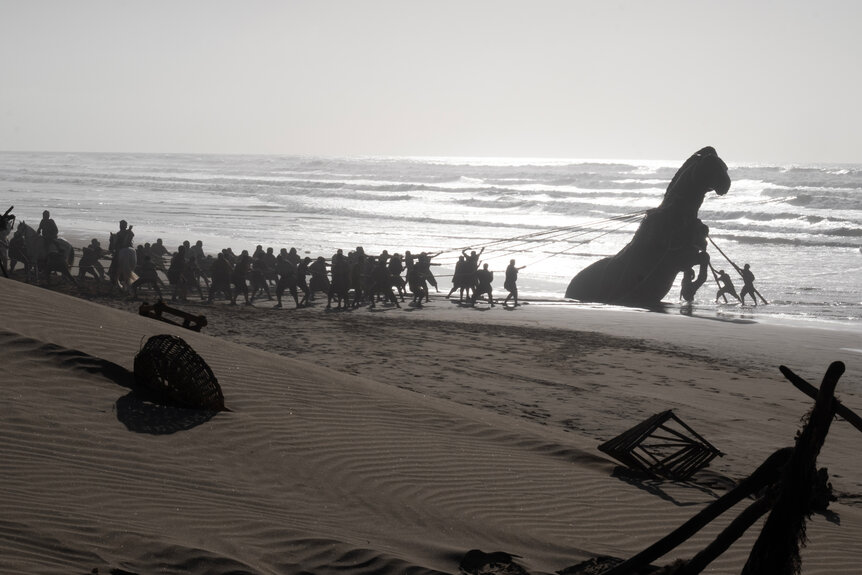
Homeric heroism depends on excellence demonstrated through action and preserved through communal memory. Nolan’s Odysseus inhabits a world in which those signs of distinction have become spiritually meaningless. His ingenuity does not free him from violence; it makes him responsible for violence on an unprecedented scale. The Trojan Horse becomes the central image of that responsibility.
In Homer, hospitality is both social contract and sacred warning, binding stranger and host beneath the possibility that either might be divine. The Trojan Horse corrupts that law absolutely. A gift becomes a weapon, hospitality becomes infiltration, and trust becomes military strategy. Odysseus’s supreme act of cunning abolishes the distinction between guest and invader. Nolan reduces the crime to a damning proposition: one man’s trick has broken divine law.
The Trojan Horse therefore becomes the hero’s original sin. Troy’s destruction is not some abstract victory, but Odysseus’s design, burden, and nightmare. He does not merely struggle to return to Ithaca; he struggles to return from the self the war created. The Trojan Horse recurs in fragments like an accusation that survives every attempt at exoneration. Troy can be conquered in one night, but the memory of conquest cannot be escaped so quickly.
Nolan’s interpretive audacity will inevitably be mistaken for eccentricity or being “woke” by viewers who prefer mythology embalmed rather than examined and history accepted rather than questioned. Consequently, Nolan transforms the homeward journey into an examination of victorious guilt. Glory becomes a cultural deception that preserves the hero’s name while aestheticizing atrocity. Each mythic trial strips away another illusion—control, righteousness, certainty, invulnerability. The Cyclops, Circe, the Sirens, shipwreck, hunger, and isolation become externalizations of Odysseus’s stained soul—of appetite, aggression, grief, and the compulsive need to dominate.
Time is not the film’s puzzle. Time is its wound… Nolan’s characteristic anachronism is no longer simply a visual or conceptual game. It becomes the syntax of his interpretation. Odysseus is both archaic warrior and contemporary veteran, conqueror and damaged witness, a figure whose geographic exile cannot be separated from the duration of his displacement. His journey is not organized as a reassuring sequence of adventures—this happened, then this happened, then this happened—but as the convulsive return of experience that has never become safely past.
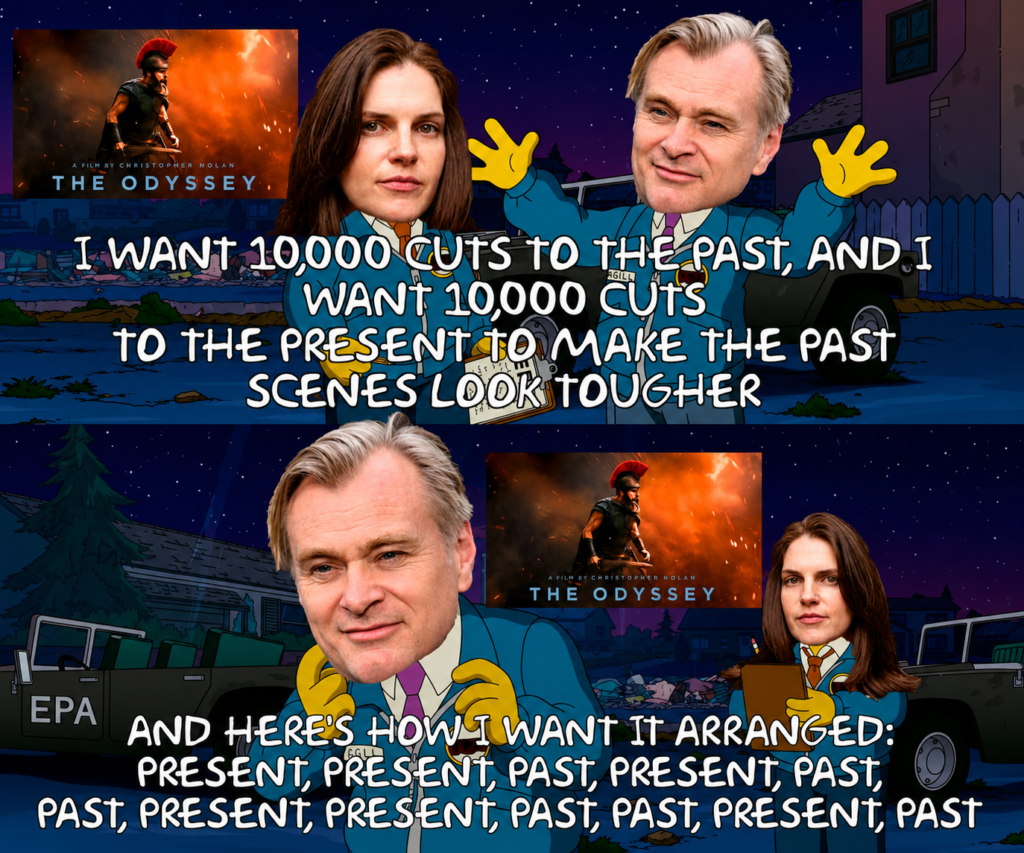
Nolan’s temporal machinery has rarely felt more emotionally necessary. Editor Jennifer Lame abandons linear exposition for invasive recollections, asynchronous timelines, and psychologically charged crosscuts.
Past and present do not alternate; they contaminate one another. Odysseus is incapable of remembering the war from a stable position outside it because he remains a prisoner of memory. Time is not the film’s puzzle. Time is its wound.
Photography as memory… Van Hoytema’s IMAX photography enlarges reckoning between time and memory. Ships become specks between water and sky; bodies disappear into beaches and battlefields. The scale is mythic rather than merely historical. Monsters viscerally embody the consequences of physical domination: the Cyclops is a grotesque practical creation, Circe’s transformations become tactile body horror, and the Laestrygonians loom through forced perspective. Nolan rescues mythology from decorative fantasy by restoring its terror. In the underworld, fallen soldiers rise not to honor their commander but to accuse him. They are not supporting characters in his legend; they are the human cost that legend conceals.
The image carries particular force in a nation that prefers its victims silent. American history repeatedly transforms suffering into patriotic symbolism while avoiding questions of responsibility. Wars are remembered through commanders and casualties; sacrifice is celebrated while inquiry into who ordered it, who benefited, and who returned home is discouraged. Nolan’s dead refuse that bargain. They reclaim their voices from the man whose glory depended on their deaths.
These episodic trials become splinters of a war that hasn’t ended for Odysseus. Scylla and Charybdis force him to calculate which men must die, reproducing the command decisions at Troy. Calypso offers oblivion, but forgetting cannot heal what hasn’t been confessed. The Sirens seduce by exposing true desire beneath declared desire: perhaps Odysseus does not truly want to return home because home demands accountability.
Matt Damon’s weathered physicality suits this interpretation. Nolan transforms his face into a landscape scarred by the ruins of victory. He anchors myth not through aristocratic grandeur but through the fatigue of a man who has spent years inventing reasons for others to die.
The gods remain largely unseen, appearing through weather, sound, coincidence, and elemental violence. Poseidon need not materialize because the sea itself becomes his face. Odysseus reads every storm as a verdict because guilt has taught him to recognize accusation everywhere. By minimizing Olympian intervention, Nolan removes the metaphysical alibi that protected heroic action. Suffering can no longer be attributed to divine stage direction; it becomes the consequence of human choice.
The film remains tethered to Odysseus’s consciousness, and that emphasis creates limitations. Nolan interrogates heroic masculinity without fully escaping its privileges. Penelope’s grief is beautifully framed but psychologically diminished, turning her too often into the keeper of a home Odysseus endangered. This belongs to a broader cultural habit in which women, especially Black women, preserve emotional and domestic order while men receive complexity, failure, and redemption.
Yet Anne Hathaway gives Penelope sovereign dignity, intelligence, anger, and resolve. Her weaving and unweaving becomes the film’s governing formal principle. Narrative threads are assembled, dismantled, and reassembled; events change meaning as Odysseus’s relation to them changes. Penelope does not merely delay an unwanted future. She performs, in miniature, the movie’s revision of the past.

The casting of Lupita Nyong’o as Helen of Troy carries significance beyond screen time. Western culture has traditionally imagined Helen as a marble ideal, aestheticizing whiteness until it appears metaphysical. Nyong’o’s presence breaks that spell. She does not simply modernize Helen; she confronts the racial imagination through which the West has pictured perfection and exposes how the classical ideal has been curated by those empowered to recognize themselves within it.
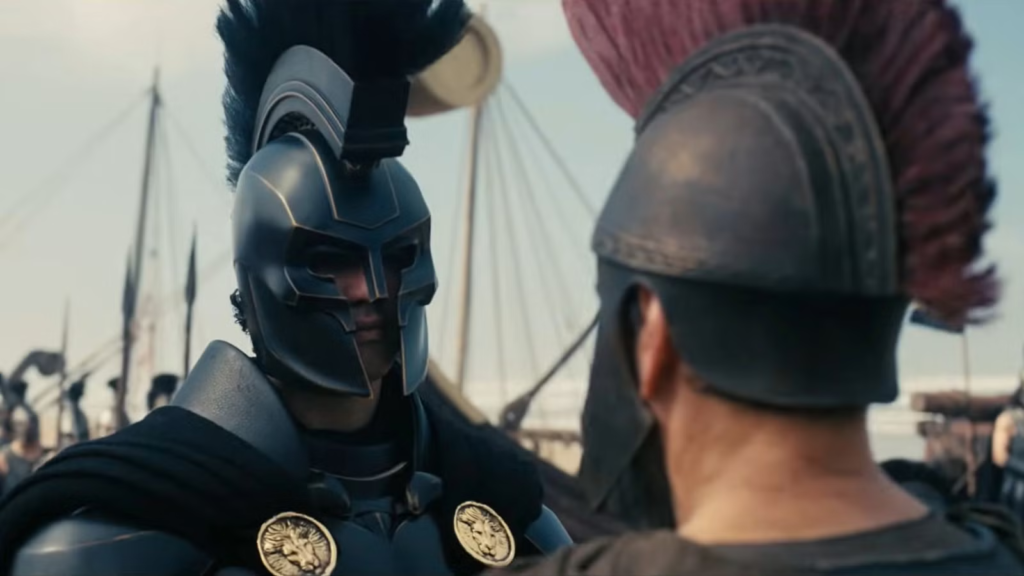
Celebrity becomes part of the film’s mythic grammar: recognizable faces appear like apparitions, briefly taking possession of the narrative before vanishing. Benny Safdie’s Agamemnon for instance, consists almost entirely of “vibe,” haunted vanity, and what Gen-Z calls aura farming. Safdie understands Agamemnon’s gravitas depends more on the social performance of inevitability than on psychological disclosure. Agamemnon enters the frame, already surrounded by the legend he wishes to impose upon others. Nolan’s casting turns such grandiosity into a joke without diminishing its menace.
Tom Holland and Zendaya remain recognizably themselves. Viewers already persuaded by either performer will find confirmation; skeptics will not be converted. This is not necessarily a flaw. Nolan uses their existing screen identities rather than pretending to erase them.
Production design and photography are master classes in material persuasion. Costumes that appeared synthetic in publicity stills acquire ritual dignity in motion. Texture, weather, architecture, and bodies create a convincing visual ecology. Heightened color makes flesh, fabric, flame, sea, and stone elements in a moral landscape. IMAX produces monumental scale without emotional remoteness. The image can contain armies and still register dread in a human face.
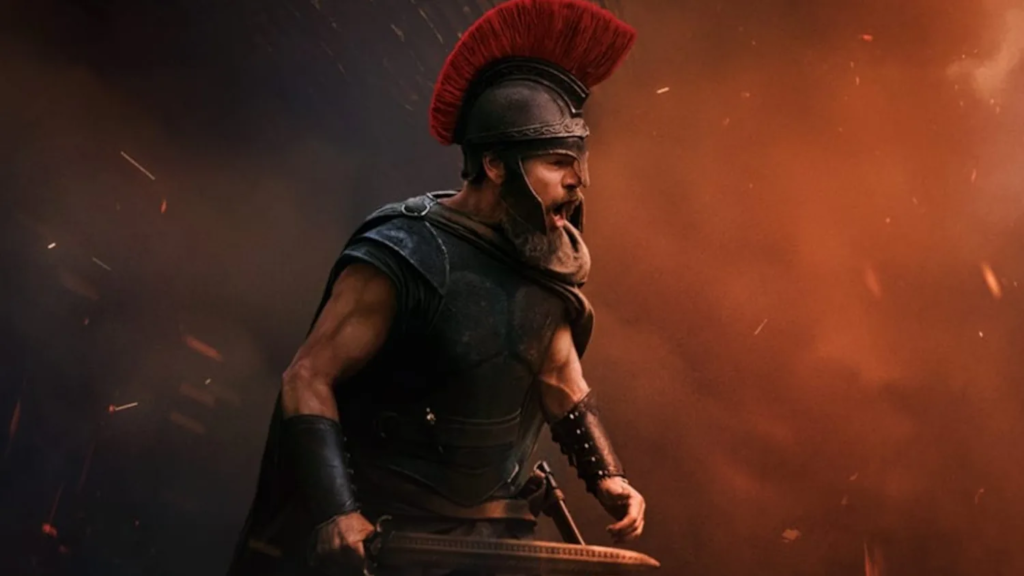
The film’s treatment of war is its most politically provocative achievement. Odysseus’s trauma is real, but it is not morally exculpatory. Nolan confronts a contradiction American culture often avoids: a soldier’s suffering may be genuine even when the war that produced it was imperial, criminal, or catastrophic for others. The veteran’s fractured consciousness becomes part of the historical damage, not a substitute for acknowledging those destroyed beyond his field of vision.
The film’s parallels to the Iraq War, the War on Terror, contemporary Israel, and militarized national destiny are difficult to miss, though they do not form a simple allegory. Every empire imagines itself as the returning hero and its victims as obstacles along the voyage home. Leaders manufacture aura, warriors transform devastation into legend, and nations call plunder destiny.
The homecoming story conceals the question no conqueror wishes to answer: What kind of home can receive a man built through cunning and war?
For all its severity, The Odyssey is exhilarating cinema: formally ambitious, tactile, psychologically coherent, politically abrasive, horrific, humorous, and mythic. The advertising sold scale. Nolan has made a film about the moral cost of scale. Nolan’s Odyssey then becomes a deconstructionist parable about the exhaustion of the Hero’s Journey. It asks whether contemporary culture can continue celebrating departure, conquest, ordeal, victory, and return without confronting the violence those stages conceal. The monomyth has become one of commercial cinema’s most dependable evasions, disguising domination as self-discovery.
The real transformation is not Odysseus becoming worthy of legend, but recognizing that legend may be the obstacle to a moral and fulfilling life. His ultimate lesson is accountability. His healing begins with the abandonment of godlike self-regard. He becomes free to live only when he relinquishes the fantasy that made death meaningful by making killing glorious.
Adaptation has always changed stories. Oral tradition is not a museum but an argument across generations. Nolan treats Homer as something to be disputed because it still possesses authority. His fragmented recollections and competing perspectives show legend being manufactured in real time. Odysseus exists differently in the memories of Penelope, Telemachus, soldiers, servants, and enemies. The hero’s identity becomes communal property, claimed by everyone affected by his actions.
The film’s flaws remain: its antiwar argument can become melodramatic, its action can lose clarity, Penelope is diminished, and reverence for male guilt sometimes becomes male self-importance. Yet Nolan turns the Hero’s Journey inside out and that is not without merit. Physical return cannot restore the spiritual and moral order the hero violated— The true journey is toward accountability—the recognition that intelligence without ethics becomes treachery, victory may become desecration, and legend itself may obstruct moral life.
Nolan’s Odyssey is not Homer preserved but Homer placed under pressure. That pressure keeps the myth alive. It allows women, Black audiences, veterans, and descendants of conquered peoples to ask the forbidden question: What if the monster was never merely waiting on the island? What if it sailed there beneath the hero’s flag?
The Hero’s Journey no longer ends when Odysseus reaches Ithaca. It ends when he recognizes that he may have brought the monster home with him. The question is not merely whether his body can return, but whether his conscience can arrive with it.
A strong four out of five. See it on the largest screen available.
If you wanna see another interpretation of the story, go check out Troy: The Odyssey over on our sister site, Galxy!
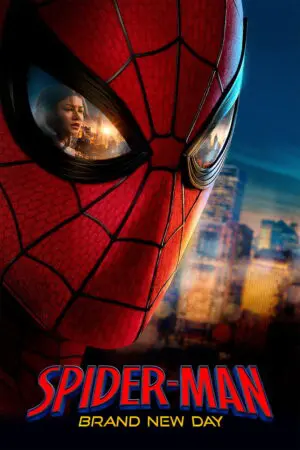
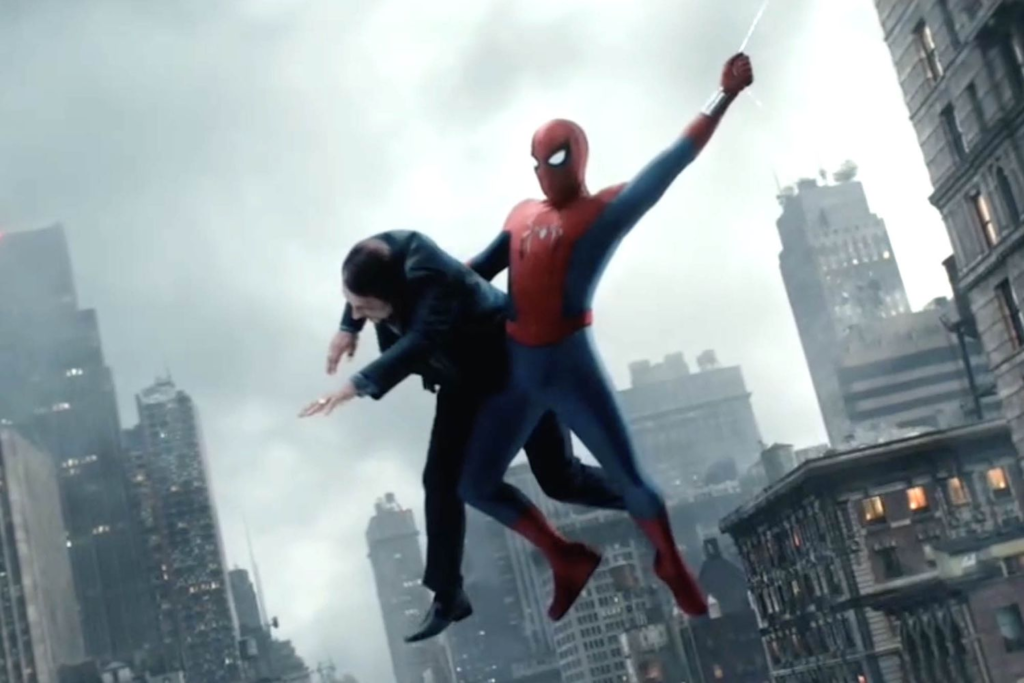
As much as Marvel tries to make all their releases feel like event films, even in their prime, few titles managed to dial into quite the same togetherness Spider-Man brings each installment. The web-spinner’s franchise consistently opens with meteoric box office numbers, becoming the hot topic among theatergoers online and in person alike, inspiring conversation anywhere you’ll go upon release. Spider-Man: Brand New Day is the superhero’s first outing since 2021, having swapped directors yet keeping the writing team onboard. Pre-release interviews with Tom Holland indicated a different tone the film would take in its performances and narrative, with trailers and stills echoing his sentiment. How did this different tone pan out in the long run for our friendly neighborhood Spider-Man?
I found this film to be more emblematic of the magic that makes Raimi’s Spider-Man trilogy so beloved than the previous film that paid direct homage by casting Tobey Maguire. Keeping Spider-Man street level and the plot grounded in New York was an excellent choice, keeping Brand New Day from feeling bloated and fantastical like it must have been hard for the executives to resist. The film is stuffed with many different characters, ideas, and thought trains, but the way they stick close to the locale makes none of it feel out of place at all. I especially loved Jon Bernthal’s role as the Punisher in this, feeling authentically New York just like Spidey as the two banter throughout the narrative. I found it helped build their onscreen bond as characters while allowing Peter Parker to outline how his own is changing.
Sadie Sink’s role in the film is one theorized by many beforehand and accidentally confirmed, and if you’re reading this, you likely already know or can hazard a guess as to who she is. What I will say without spoiling much is that her character’s inclusion felt natural and earned, making sense in line with who Peter has become as a character without feeling like she’s setting up as much as she inevitably has. Setup in a Marvel movie has thrived in the past when it’s not the focus of the original narrative but can be pieced together later on. I don’t think Avengers: Doomsday will hit nearly as hard as this return to Spider-Man has with audiences, but I hope the reality of this film helps put the MCU as a whole into perspective as to where to go creatively.
Spider-Man: Brand New Day is now available in theaters worldwide. If you’re in the mood for more superhero epics, check out The Return of Captain Invincible on our sister site, Galxy!
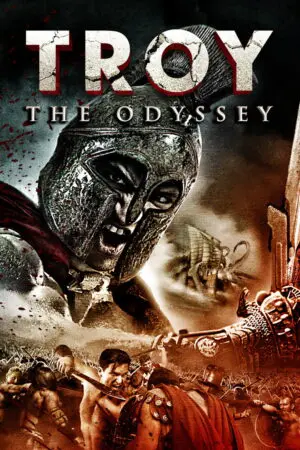
Just in time for the release of Christopher Nolan’s Odyssey, our Galxy movie spotlight this time lands on Troy: The Odyssey, a 2017 action-adventure adaptation of the story directed and co-written by Tekin Girgin. The film follows the outline of the same story as what was written by Homer, condensing Odysseus’ (Dylan Vox) journey into a 90 minute epic, nearly half the newest adaptation’s runtime. The film is also known by its alternate title God Wars, taking a few creative liberties in its retelling of Odysseus’ travels back to his homeland.
The adaptation takes shape through a stunning ensemble cast headlined by Dylan Vox, Lara Heller, Kelly B. Jones, Dan Renalds, and Andi Royer among others. Odysseus meets many characters along his way back to Ithaca portrayed by these performers, making for a smorgasbord of talent on display alongside the road back home.

If you find yourself interested in The Odyssey as a story, I highly recommend checking out this version. With how timeless the story is, the way it’s persisted through the ages, and the practically endless amount of adaptations out there, there’s no better way to get started on your very own Odyssey odyssey. Especially now that Troy: The Odyssey is now available to stream on Galxy!
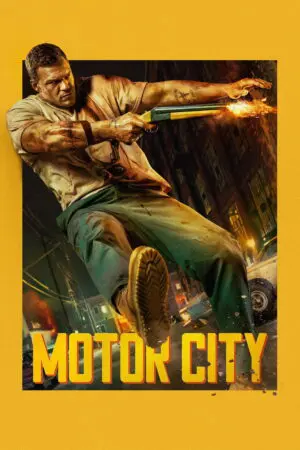
Monday’s “Screen Unseen” at AMC Theaters opened with Motor City, directed by Ponsi Ponciroli and written by Chad St. John. The film feels simultaneously like a film from the past and a tribute to them, and for good reason. The film was originally listed in 2009’s Black List, taking until 2025 to have its first cut screened following years of recasts, restructuring, and rescheduling. Starring Alan Ritchson in the lead role of John Miller, the character is framed and has his life stolen from him following the revenge of Reynolds (Ben Foster), a gangster from his past. The glow of 1970s Detroit night life takes center stage as Miller runs through the city he calls home to fight for his life, in more ways than one.
The most distinct quality of the film is its lack of dialogue throughout the majority of its runtime. The writing expenses words where applicable, but the story is by and large told through the body language and facial expressions of its characters. The extent to which this is utilized is one of the strongest parts of the movie for me, and I love how it in turn allowed for the sound design to shine in every sequence.

The film does feel stuck in the past in a few ways that don’t necessarily help add to its nature as a period piece or one a long time in the making. A few plot beats between the first and second acts didn’t necessarily make sense to me from a pacing or narrative perspective. I didn’t understand much of what the police detective’s significance was in the film, and his plotline didn’t affect any of what happened in the film’s third act or its resolution.
I wasn’t immediately hooked by the energy of the film—I would argue its first act was my least favorite—but the good news there is that I only found myself getting more invested as the film continued. Even still, I was torn between loving its points of inspiration and waiting for some elements to develop in a more interesting way, and some just never did. The protagonist’s girlfriend Sophia (Shailene Woodley) was beginning to gain a fascinating dynamic in the film’s narrative, but her character ended up in the exact predictable plot trap I was really hoping she wouldn’t.
Overall, I thought Motor City was a worthwhile action thriller with lots of fun throwback elements of the genre, loving tributes, and some spots worth improving upon in the pacing and beats.
Motor City is available in theaters this Friday, July 24th. In the mood for more action thrillers until then? Check out Better Criminal on our sister site, Galxy!
This month on our sister site Galxy, we’ve got a brand new slate of movies for all our readers (and viewers) to check out, spotlighted from July 1st. Stories of independence told in the titular Independents’ Day and The Cosmic Hoax, as well as the whole Transmorphers trilogy. Take a look at what we’ve got lined up!

Independents’ Day
Independents’ Day is a mockbuster based on the works of Steven Spielberg, zooming onto Galxy just in time for the director’s new film! When aliens visit an Earth they believe to be rife with violent inhabitants, they capture civilians who they believe to be in need of their help. While their efforts take shape, the military on Earth makes arrangements to take back their people.

The Cosmic Hoax: An Exposé
A documentary directed and written by Michael Mazzola, The Cosmic Hoax explores the truth and history behind UAP sightings and stories. The film stars Dr. Steven Greer, a veteran ufologist with many stories of his own to recount.

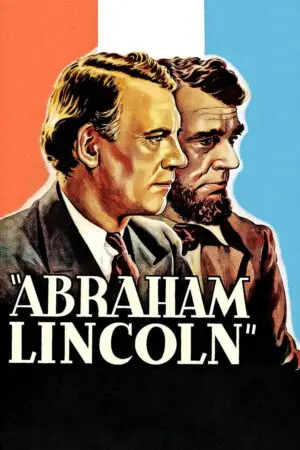
Abraham Lincoln
Abraham Lincoln is the 1930 biography of the 16th President of the United States. Starring Walter Huston as Abraham Lincoln, the film documents the life and times of Mr. Lincoln in extensive detail, including some of the lesser-known aspects of his life you won’t often find in the history books.

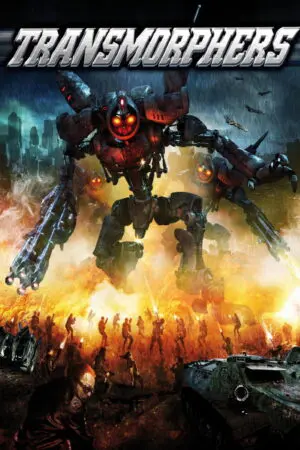
Transmorphers
An alien mockbuster like Independents’ Day, Transmorphers is based on both the Transformers and Terminator film series. When extraterrestrial robots land on Earth with an objective to conquer, they force civilization underground for hundreds of years. It’s up to a small group of driven underground humans to take back their planet.

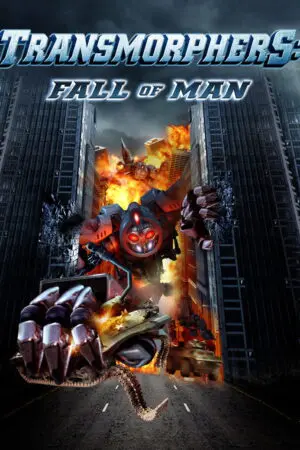
Transmorphers: Fall of Man
In the prequel to the above film, Transmorphers: Fall of Man shows the exact moment things went from bad to worse. Another group of resistant humans do their best to save their species from the incoming robo-extraterrestrial threat on the horizon.

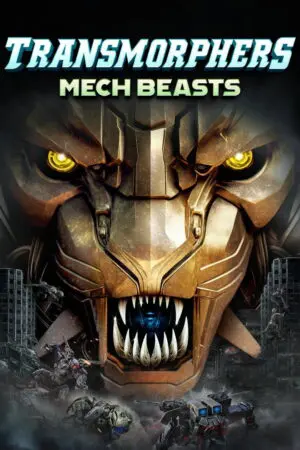
Transmorphers: Mech Beasts
Mech Beasts is the official sequel to the original Transmorphers, released over 15 years later and taking place 20 years in the future. Living their new normal following the previous film, yet another threat descends from space threatening to take over the planet once again and wipe out all surface life.
These spotlighted films for the month of July and more can all be viewed now on Galxy. Safe travels!
Get Some Strange!