
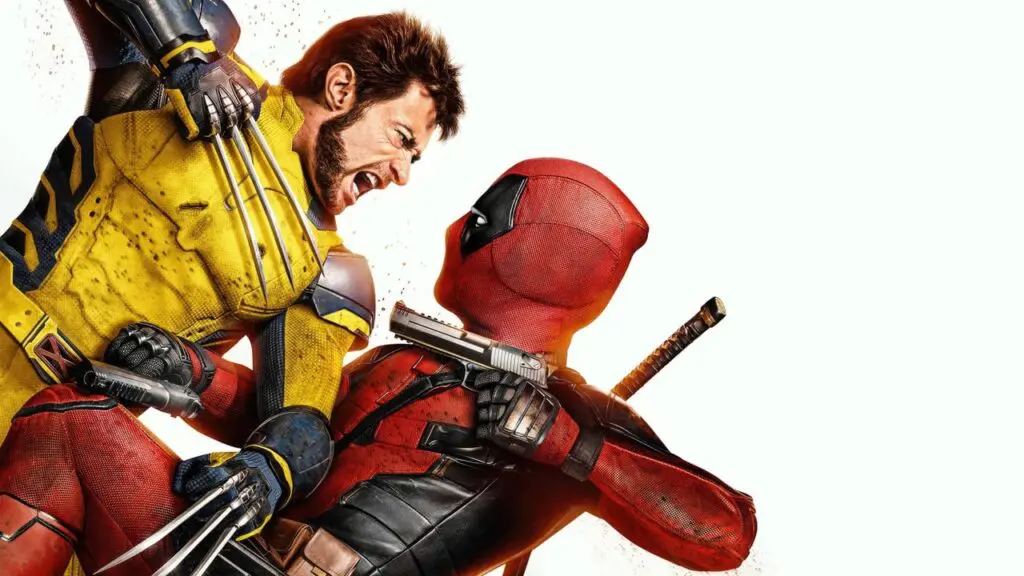
With a superhero film franchise as unorthodox as the Deadpool films, it’s important for them not to overstay their welcome. As much charm as Ryan Reynolds’ delivery brings to the character in motion, as hilarious and meta as the writing tends to be, it would have gotten old quickly if not for the great spacing between films. While 2018’s Deadpool 2 was a fun surprise after a short two-year wait, Deadpool & Wolverine caps off the trilogy after six years in development hell. It’s not a perfect movie by any means, but in a way, the film serves as the perfect Deadpool movie. Now that the character is owned by Disney’s Marvel Studios (as are the X-Men and the Fantastic Four among others, but more on that later), Deadpool has a lot more room to play around and break comic book movie conventions far more faithfully than ever before. Playing into long-time rumors, dreams, and iconic moments throughout the Marvel franchise’s cinematic history, Deadpool & Wolverine makes the most of the empire the titular characters spend the movie’s runtime disrupting.
With this new installment, the creative team behind the trilogy is firing on all cylinders. Despite the ownership being transferred to Disney from Fox, the film’s writing is emblematic of Deadpool in his prime with no corners cut, with the absence of cocaine being the exception. It’s an all-star writers’ room for a Deadpool movie, with Rhett Reese and Paul Wernick returning as well as Ryan Reynolds himself. A new addition to the team is Zeb Wells, a seasoned Marvel comic book writer. This isn’t Wells’ MCU debut, having written on She-Hulk: Attorney at Law and The Marvels recently. In addition, Wells is penned as the head writer on the upcoming Marvel Zombies for Disney+, the first TV-MA animated series for the franchise. To cap off the team, we have Shawn Levy, who also directed the film. Many know Levy as the director of Free Guy and The Adam Project, both of which starred Reynolds as well. In a sense, this movie’s release completes Levy’s own Reynolds trilogy.
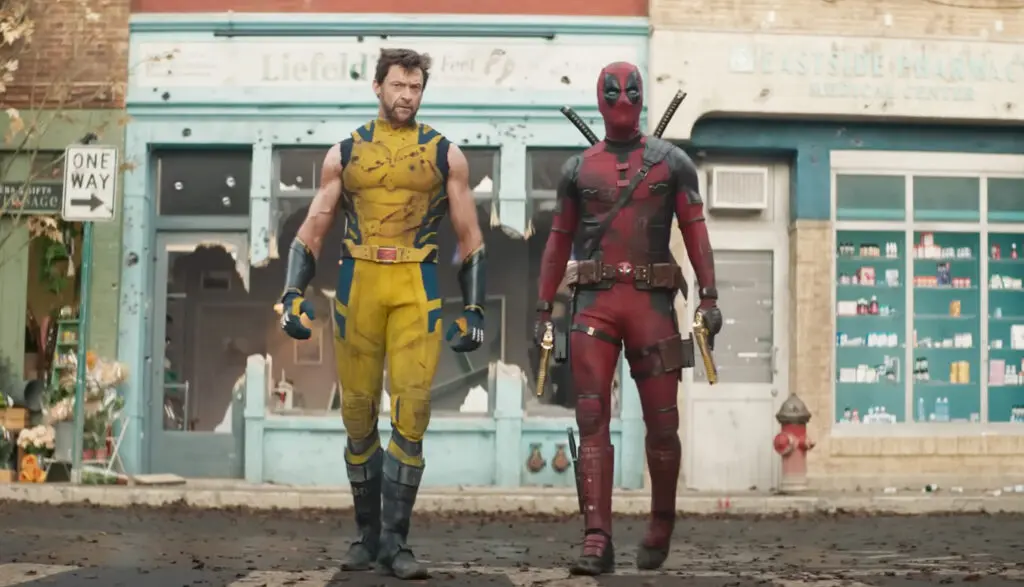
While the film occasionally runs into modern Marvel’s problem of sloppy CGI/VFX usage (not that it’s exactly the VFX studios’ fault), it can often be excused as part of Deadpool’s charm. With how often the movie and Deadpool himself pokes fun at the current state of the MCU and its recent hiccups, I was honestly expecting a joke or two about that. However, fans of the franchise know Deadpool is at his prime when you can’t expect what will happen next. Case in point: the opening credits sequence. Each Deadpool movie opens with a subversive opening credits sequence that lets the audience know the movie’s gonna be a little different than the usual Marvel flick. The first film in the trilogy opens on a free-roaming still shot of Deadpool in a car fight, occasionally zooming into nooks and corners to show the names of the cast and crews. Deadpool 2 is a bit more traditional, with cast & crew title cards accompanying emotional and hilarious shots of Deadpool himself set to Celine Dion’s “Ashes”. Both of these title sequences poke fun at the cast & crew shown by referring to their other works, bashing them, or even just bringing up unrelated nonsense in their place. However, Deadpool & Wolverine (in its meta nature) takes these sequences THEMSELVES and flips them on their head.
The title sequence for Deadpool & Wolverine is traditional in the sense that it actually shows the names of the cast, crew, and production companies with no caveats. However, the sense of tradition ends here as these namedrops are intercut with footage of Deadpool himself passionately dancing to *NSYNC’s “Bye Bye Bye” from 2000. As heads fly, blood spills, and bones break, Deadpool finds a way to interact with the name cards that show up throughout the fight and dance scene. Of the three movies, I find that this intro in particular best shows off what the merc with a mouth is all about the best, and that it works perfectly as the grand finale of the Deadpool title sequences.
We’re staying a bit hush-hush on the plot, understandably so. There’s so many cameos, references, and jokes throughout the movie that shouldn’t be spoiled but seen on the big screen as Wade would want you to. However, without giving away too much, Ryan Reynolds and Hugh Jackman’s history of the two title characters soars in how their chemistry makes for one of the most anticipated team-ups in cinematic history that stuck the landing and then some. Deadpool’s depiction in film has almost always been flawless. Almost. The energy Reynolds brings to the character transfers his comedy over from the comics super well, but also has its own unique flavor only witnessed on camera. However, Jackman’s portrayal of Wolverine has always been much more grounded, action-packed, and gritty, whether you think as far back as X2 to as great of a capper as Logan was. When you put two of these Marvel characters who should never be in the same room as each other in the same film as starring protagonists, it makes for a campy, bloody, love-hate dynamic that just makes all the sense in the world as much as Wade made it out to be back in 2016.
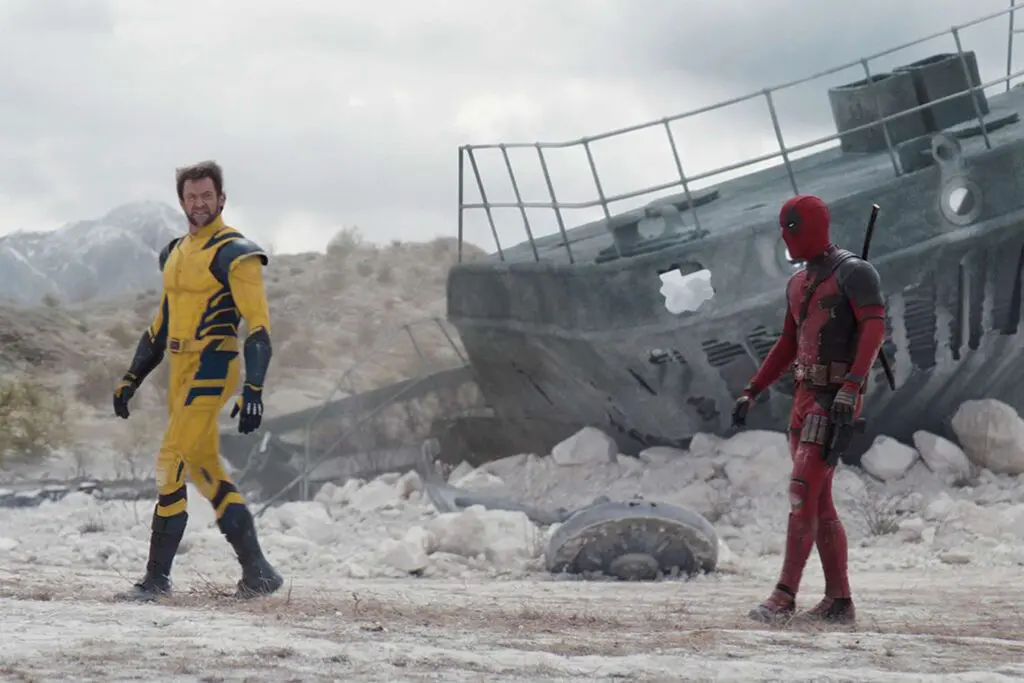
Deadpool & Wolverine is now playing in theaters worldwide.

SPOILER WARNING FOR SEASON 4 OF THE BOYS!
This past Thursday brought the highly-anticipated season 4 finale of Amazon Prime Video’s The Boys, and what a high note to end on. As polarizing as the fourth season’s contents have been for the show’s fanbase, many seem to agree its final episode was packed to the brim with great pacing, conclusions, and setup for the show’s final season.
Before getting into much of what was executed in yesterday’s finale (both cinematically and literally, but we’ll talk about that later) we need to address the elephant in the room. As close as The Boys can veer to reality and current world events at times, the conclusion to season 4 was preceded by a very unfortunate coincidence. The season finale, fittingly titled Season Four Finale at the moment of writing, was originally set to be titled Assassination Run, which would have fallen in line with how the Victoria Neuman & Robert Singer plotline was set up to conclude narratively. However, no one could have predicted in the time between the penultimate and final episodes of the fourth season a real assassination attempt on former president and currently running candidate Donald Trump. To distance themselves from the incident while assuring viewers all acts of political violence portrayed in the episode were fictional and coincidental, Amazon chose to rename the episode and insert a disclaimer beforehand. However, to our knowledge, no actual contents of the episode were removed, changed, or added as a result of this.
The political violence in question doesn’t exactly mirror the incident either, for what it’s worth, though it did remain surprising as far as its portrayal went. Everyone seemed to have their theories on which characters wouldn’t make it out of the season alive, as its narrative seemed to set up some of the highest, darkest stakes for a lot of the main cast to date. However, the originally titular assassination is only one of two major deaths actually shown onscreen by the time the credits roll. Sure, much of Vought’s employees with dirt on The Seven were mass murdered by the superhero group, as well as the head of the CIA, but the real danger lies in the death of Victoria Neuman by none other than Billy Butcher. Throughout the season, we’ve watched Butcher grapple with whether he wants to leave his mark on the Supes before he expires, or if Ryan’s straying off Homelander’s path could redeem some of them in his eyes. However, when Butcher witnesses Ryan kill Grace Mallory in front of him (the second major death in the finale) he decides enough is enough; if going bad is what it takes to save the world, he’ll have to work quickly and on his own terms before time is up. Armed with nothing but a car and a shot of Frenchie’s virus, he rides off into the night with the mirage of Kessler in the backseat as the credits roll.

The resolution of Homelander’s conquest for control of his nation is much different in direction than he had it drawn out, though its implications are perhaps even more chilling than initially thought. When marshal law is declared, we’re treated to every single member of the Boys minus Annie getting apprehended and taken into federal custody by the Supes that Homelander’s deployed on day one, specifically targeting Starlighters.
A lot of information about the season’s contents leaked beforehand through the now defunct Instagram account @voughthq, though the account’s credibility is thrown into question when looking at a lot of the little details as well as scoops that just flat-out weren’t true at all. Annie did fly away from the scene Hughie was apprehended at, though it wasn’t symbolic of her “leaving him” nor was it the final scene of the season. Their claim that A-Train wasn’t “use[d]…enough” is more than a little misleading as he was the Vought leak and a central storyline of the season was his attempts to leave the Seven and redeem himself in the eyes of Hughie and the rest of the Boys. In addition, Starlight never even got high with Frenchie as they claimed, nor did Ryan’s season end “with him covered in blood”. Even with an ACTUAL Vought leak rapid-firing on social media, the season managed to deliver with plenty of surprises, shocking resolutions, and intense setup for a final season undoubtedly set to be one of the biggest moments in pop culture and streaming history.
All eight episodes of The Boys‘ fourth season are now streaming on Amazon Prime Video.
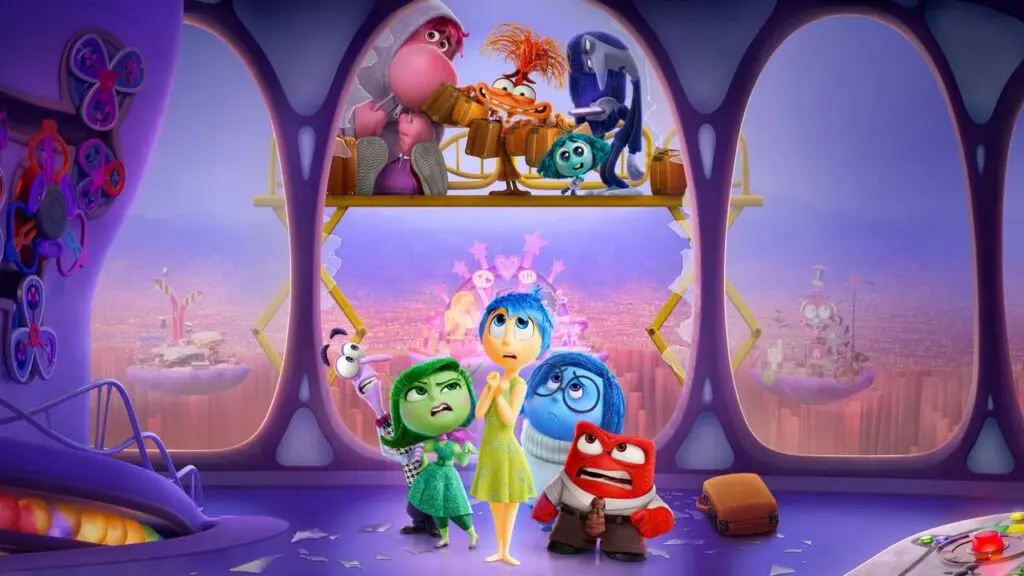
Of the newer Pixar IPs that audiences would have liked to see a sequel to, it’s a safe assumption that Inside Out was at the top of most peoples’ lists. Not only is the mind such a vast, expansive place that can house much more ideas than only one film can catalog, but with how it grows and changes it seemed like a no brainer to eventually explore what comes next in Riley’s life, and how relatable topics like change at an older age can be explored in the context of the emotions in her head. Luckily, Inside Out 2 sticks the landing with a multitude of new characters, concepts, locations, and ideas that come together in a package just about as well-rounded as the initial entry in the series.
The start of puberty and the onset of anxiety go together like clockwork in the eyes of many, so the introduction of Anxiety as the main focus of the four new emotions (along with Envy, Ennui, and Embarrassment) was one of the more predictable plotpoints of the film. What the film does to help subvert this is by making Anxiety’s character go even deeper than a few of the initial five emotions from the original film. The character, voiced by Maya Hawke, is full of energy and is constantly jumping around and fidgeting, perfectly representative of the uncertain nature the emotion brings. In that same vain, Anxiety seems to have numerous ambitions and plans she would love to put in action, but has an unsure air about her when anything goes even slightly differently. Comparing this with Joy, who has grown since the last film in that she’s always looking for the next idea to keep moving forward, it’s clear that these new emotions aren’t repackaged characters from the initial Inside Out or useless in any way. They all serve to build out the world inside all our heads and help explain and break down many complex concepts that aren’t fun to deal with the reality of.
Speaking of the other new emotions, all three of their actors knock it out of the park. I was particularly looking forward to Ayo Edebiri as Envy, as while knowing her best from her work in FX’s The Bear, the energetic nature she puts out in interviews and on the internet is something perfect for voice acting, and she absolutely nailed the character. Adèle Exarchopoulos does an exceptional job as Ennui as well, the character whose job is seemingly nothing at all, reflecting the boredom of the emotion. Exarchopoulos previously voiced Ember in the French dub of Pixar’s Elemental, and while it’s great seeing her back here in the original language version of Inside Out 2, what I find even greater is that she reprises her role of Ennui in the French dub of this film as well. It reminded me of Antonio Banderas’ portrayal of the titular character in Puss in Boots: The Last Wish in both the English and Spanish versions, and I hope more foreign actors cast in overseas animated films continue this trend of reprising their roles in dubs.
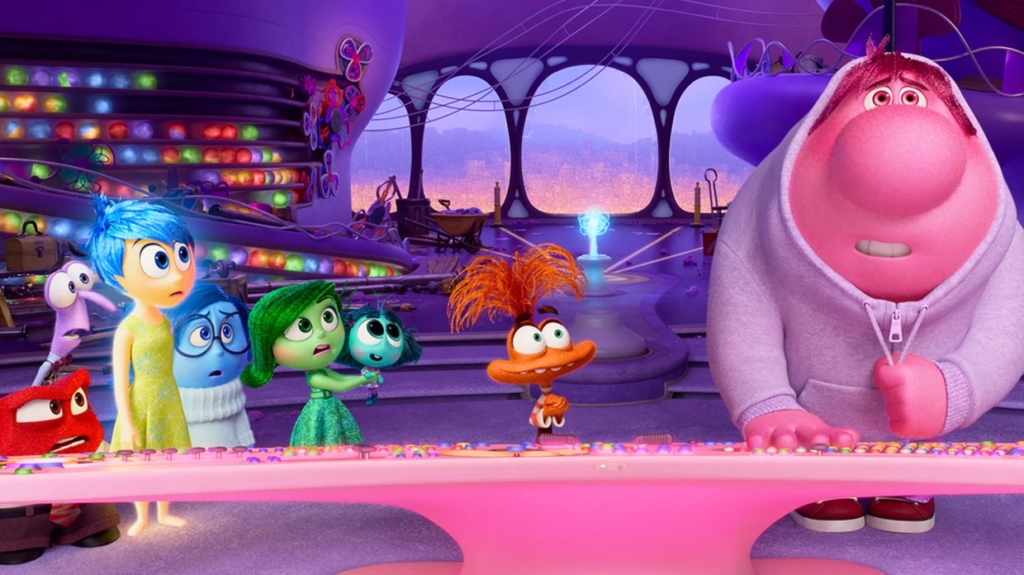
It’s really fantastic to see just how well this film has done and continues to do at the box office. Inside Out 2 currently holds the record for the fastest any animated feature ever has passed the billion-dollar milestone at the box office, and is currently the first and only film of 2024 to do so. The film’s weekend drops following its release have been impressively low as more and more moviegoers continue to watch the film in theaters, and is currently on track to beat the worldwide grosses of Finding Dory, as well as Toy Story 3 and 4. At this point, it’s not impossible for the film to push past Incredibles 2 and become Pixar’s highest grossing film of all time.
The story of Pixar being caught in the crossfire of Disney’s recent financial woes is one known to almost all moviegoers at this point, especially those closely following feature-length animated film news and trends this decade. 2020 was a rough year for many studios and Pixar was no different, with its first film of the decade Onward releasing less than a week before the COVID-19 pandemic was declared as such. The studio’s next three films, Soul, Luca, and Turning Red, were forced onto Disney’s streaming platform by the parent company, a decision criticized even by those within Pixar. Lightyear, Pixar’s return to theaters in 2022, failed to break even at the box office, a threat their next film Elemental faced briefly as well until ticket sales picked up later in the film’s lifespan. In an interview with Variety, chief creative officer of Pixar Pete Docter partly attributed these films’ underperformance to the aforementioned direct-to-streaming model Disney adopted during the pandemic, claiming audiences had been “trained” on said model to the point that they could expect to just wait until Disney films came to streaming, being less expensive than four tickets to a theater.
Due to these financial struggles on Pixar’s end, the company experienced numerous layoffs in May and announced its plans to veer away from their focus on original titles they began at the start of the decade. At the end of May, Bloomberg reported the studio’s goal would be to intersperse their original titles among spinoffs and sequels of already existing Pixar IP, similar to their filmography from the mid-to-late 2010s. The loss of a focus on original films from the studio is undoubtedly heartbreaking, especially when keeping in mind the bumps in the road this recent batch had faced, though hopefully this new strategy from the studio will help re-establish Pixar and its IPs (legacy and newer titles) as household names once again. If the output is as consistent as the quality of Inside Out 2, we could potentially enter a Pixar renaissance.
Inside Out 2 is now playing in theaters worldwide.

Netflix’s 24-episode first season of the Delicious in Dungeon anime adaptation took the world by storm last year with its mastery of blending two unlikely genres. Combining fantasy and cooking with a dash of fictional biology lessons, as well as localization consisting of an all-star voice cast and a charismatic writing team, the show was quick to catch on with even viewers who didn’t usually indulge in either genre—myself included. No matter how integral each episode is to the core plot of saving Laios’ sister Falin, they all serve as important steps to understanding each of the main protagonists’ nuances and differences from each other, as well as growing attached to them. With the show airing its season finale this past Thursday, it ends off on a bit of a cliffhanger as the party decides to lay out a plan for their next steps rather than definitively wrapping up any loose ends or key plotpoints. It’s a bit of an unclear ending to the season that leaves a lot to the imagination, which is a blessing and a curse as it leaves more questions than answers in a way. What is the party’s main goal going forward after the ending?
Delicious in Dungeon Season 2 is Confirmed
With the series’ incredible success on the streaming platform, it didn’t come as a surprise that a second season would come eventually. In fact, light press confirmation of the second season’s greenlight has been floating around for a while. It was confirmed on the series’ official Twitter account yesterday with the release of the season finale, however, that not only has the second season been greenlit, it has begun production. The release date of the second season and its episode count are currently up in the air, but what’s important is that it’s not a matter of if, but when Delicious in Dungeon will return, hopefully with a conclusion to the Falin storyline.
Will the next season have 24 episodes like the first did? Many anime series at the moment tend to cap their seasons off at 12-13 episodes each. The first season of Delicious in Dungeon could technically be categorized as this, as starting with episode 13 it technically became a second season (complete with a new opening and another 12 episodes following the first 12) or a second part to season one. Another currently running anime, Urusei Yatsura, has 23 episodes total in both its first and second season orders, though these are also split up as evident by their changed openings. It’s entirely possible the second season of Delicious in Dungeon could cut the episode count in half for the sake of time, though with the weekly release strategy having worked to the series’ benefit, it’s plausible for the count to stay at 24. Again, it’s all speculation at the moment, but Trigger still does have a fair amount of the original manga left to adapt, so there’s no need for fans to worry about counting what time they have left with Laios, Marcille, Chilchuck and Senshi (and Izutsumi, if you’re that far in).
The entire first season of Delicious in Dungeon is now streaming on Netflix,
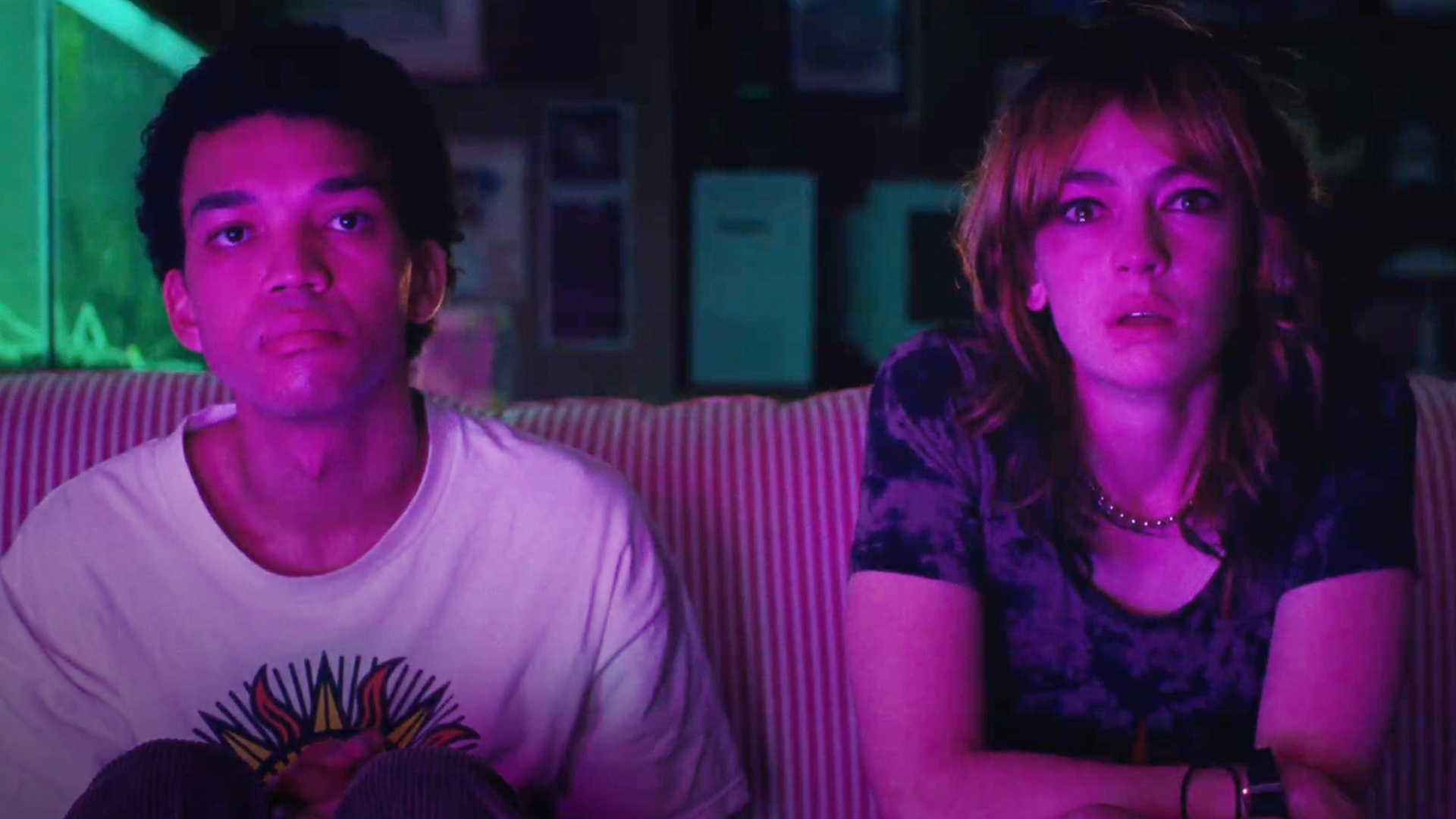
The psychological horror film I Saw the TV Glow released this past weekend from director Jane Schroenbrun. Their previous work on their narrative debut film We’re All Going to the World’s Fair was absolutely groundbreaking, perfecting the medium of webcam storytelling onscreen and telling a story that uses the internet as a tool to elevate its already disturbing aspects rather than as a marketing gimmick. With a spectacular score provided by Alex G, the film resonated with many of its viewers as it portrays an accurate look into deep web culture and pressure like no film before. With as successful an experimental film as The World’s Fair, Schroenbrun was a great pick for A24 to take notice of and distribute their next film, as well as production work provided by Emma Stone’s production company, Fruit Tree. I Saw the TV Glow plays most of its shots fairly straight—no webcam shots here—but pushes them past their limits to highlight the heart of the film and amplify the uncanny and familiar feeling of a niche interest that goes so much deeper than it initially appears.
Online, there seems to be a divide between those who find the film overrated and confusing and those who think the message couldn’t be more obvious and reprimand those who think otherwise. Personally, I feel even on a shallower scale the film sends a well-mannered message about how humans can bond over even the most obscure things. When it comes to the fictional show, The Pink Opaque, Owen and Maddy (played by Justice Smith and Brigette Lundy-Paine respectively) find their whole lives forever changed by its very presence. Yet, despite its seemingly unending reach across their entire lives and irreversible mark on their mentalities, the two of them seem to be all they have in regards to thinking, talking, and acting on it. Having an obscure special interest like Owen and Maddy share in the film is portrayed in an incredibly real, mature way. It can feel like a lonesome, unique experience, whether you truly feel alone in your investment or if you have people willing to listen, but not to understand.
Of course, the deeper meaning of the film comes down to the exploration of self-identity, finding yourself and who you are, and how that correlates to your place in the world. The film makes it clear from the start how Maddy views the world as whatever someone makes of it, and wants Owen to feel the same. However, Owen is apprehensive about fully immersing himself into The Pink Opaque, feeling self-conscious about even dropping the show’s name in front of his parents as he knows they wouldn’t understand. With the film being through the eyes of Owen from start to finish, we even get a few glimpses of the life he would be living if he listened to Maddy fully, embracing who he truly is and how the show truly makes him feel. It’s a clear enough allegory for one’s own identity in regards to gender, sexuality, and personality that it hardly even feels allegorical at times. Just as The Pink Opaque feels realer than a show for Owen and Maddy, the viewing audience will be able to feel the genuine pain portrayed by the two in how they respond to the show’s storylines, and how no one else quite seems to understand. In my own opinion, that’s what really drives a great psychological horror home, when it feels as if the lines between cinema and reality are blurred together just enough to stick with its viewers far past the drive home from the theater.
I Saw the TV Glow is now playing in theaters nationwide.
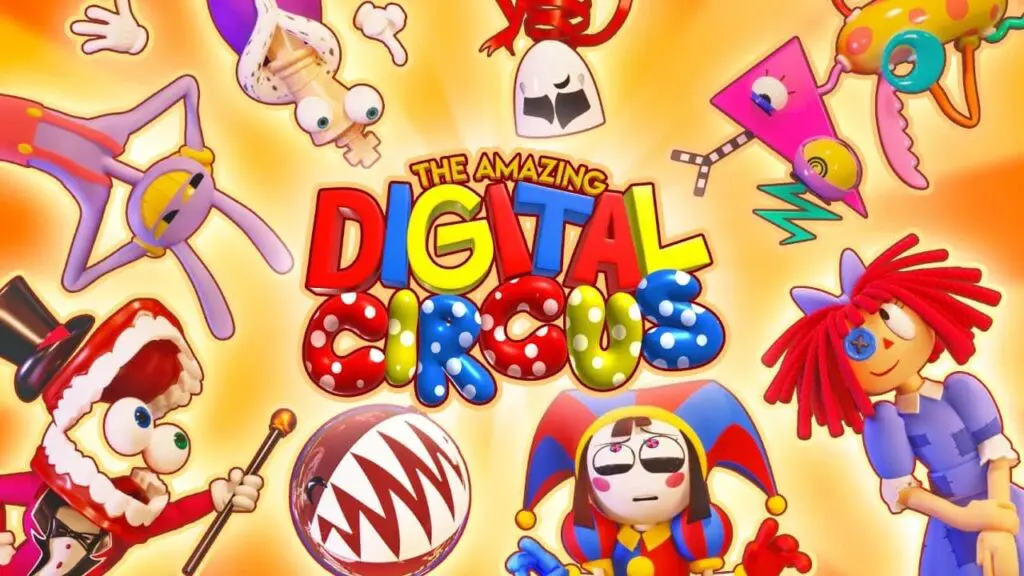
It’s a big day for fans of indie animation as Glitch Productions (Murder Drones, Meta Runner) has announced that the next episode of The Amazing Digital Circus, created by Gooseworx, will release to their YouTube channel on May 3rd.
The Twitter post published today reveals the central location of the next adventure, the Candy Canyon Kingdom. It appears that the cast introduced in the pilot will be present on site, with the exception of Zooble who noticeably lacked a drive to join them last time.
The Amazing Digital Circus lit the world on fire when it initially released back in October of last year, amassing over 300 million views as of mid-April and being almost immediately greenlit for a full series order by the indie animation company, Glitch Productions. They alongside other independent animation studios such as SpindleHorse Toons (Hazbin Hotel, Helluva Boss) have been able to offer content to animation fans and animators in need of work in light of the industry’s recent layoffs and contract disputes. The funding for said content mainly comes from merchandise sales on their respective websites, which fans of both studios have happily been supporting for years.
Episode 1 of The Amazing Digital Circus is available to watch for free right now on YouTube, with the next episode releasing two weeks from today. We’ll be here to cover it when it arrives.
Get Some Strange!